
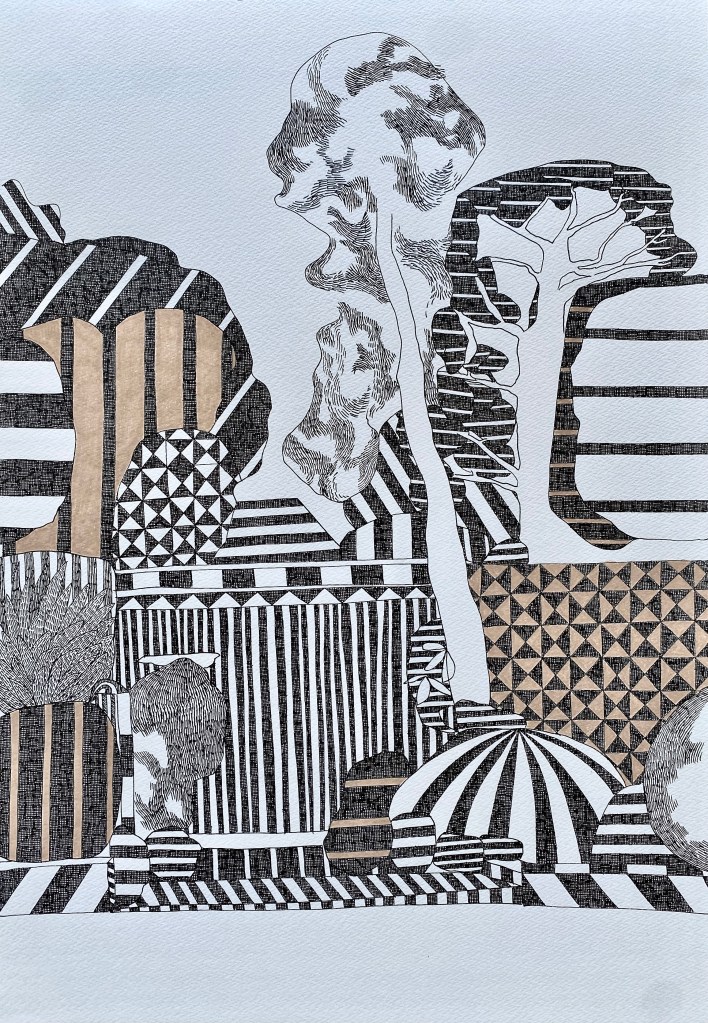


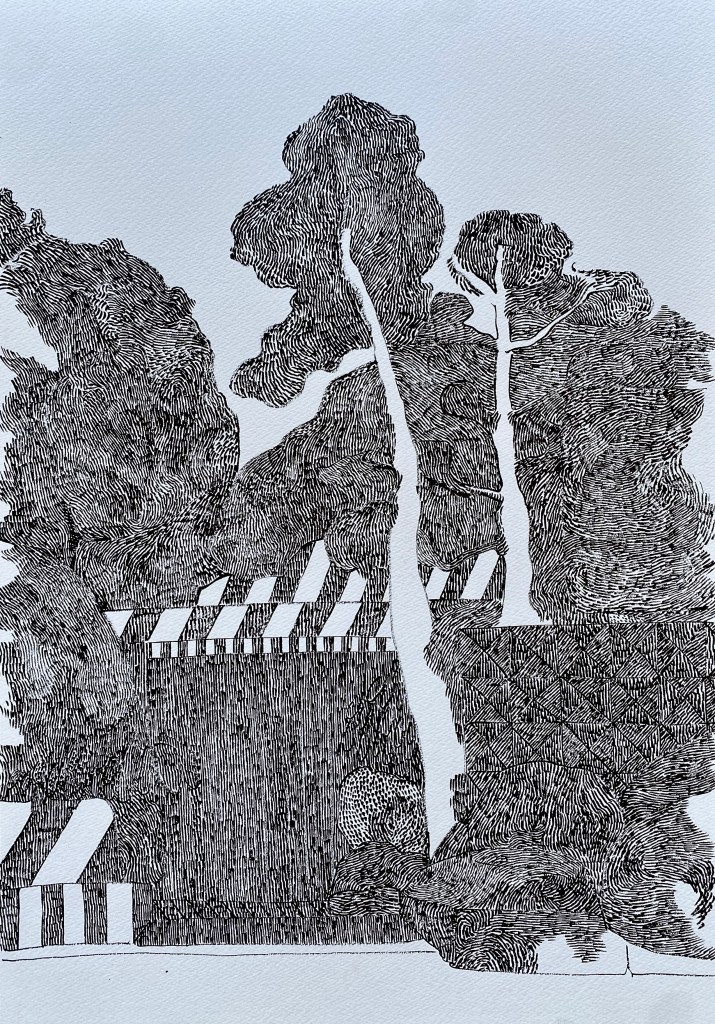


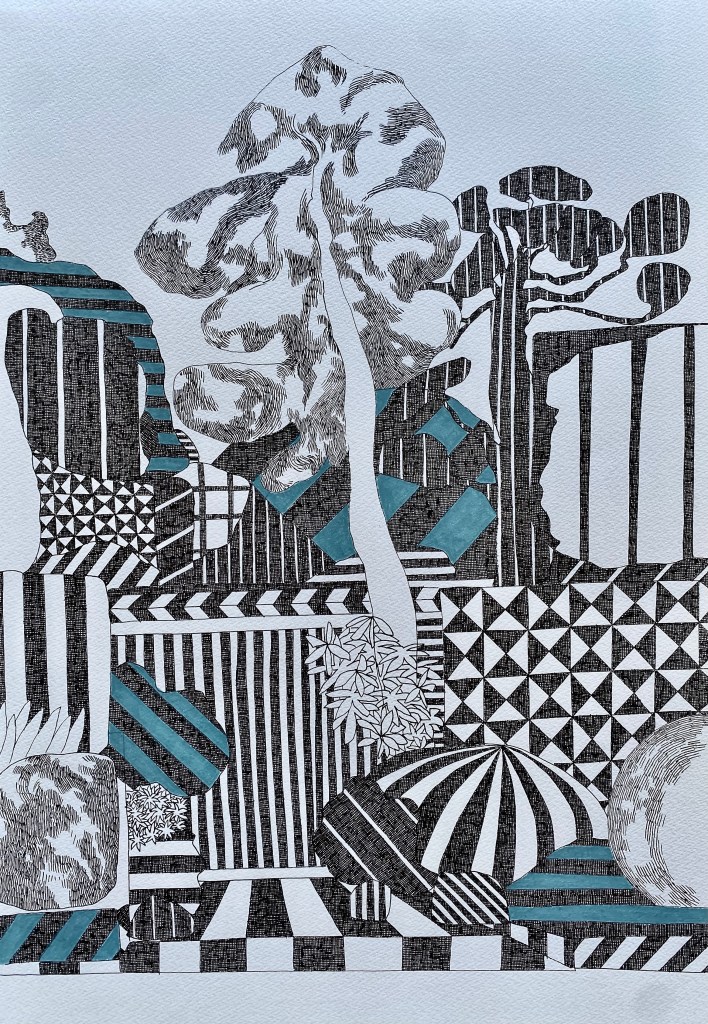

Assembling the Terrain 2023
These focalized compositions unfold slowly—forms emerging through layers of shadow and light, their contours revealing themselves in quietly decisive ways. Each piece is the result of prolonged, attentive processes, where multiple stages of development aim to reconfigure perception—inviting a shift not only in what we see, but in how we see. They are, in essence, meditations on visual and spatial nuance.
The series Assembling the Terrain 2023 evolved during a return journey from Tokyo, when a detour along the coastal road of the Izu Peninsula led me in search of Pacific views, a restorative onsen, and materials for an installation exploring geological time. On a slow walk through one of the places I paused at, I encountered the entrance to a private Japanese garden—a moment of quiet clarity that seeded the conceptual framework for the project.
This encounter became a study in Niwaki—the Japanese practice of “garden trees”—which is less about the tree itself and more about the intent, discipline, and aesthetic logic behind its shaping. Niwaki is the art of revealing form through subtraction: clipping, coaxing, and curating nature into meaning. In the garden, the landscape is not merely observed but composed—a collaboration between time, restraint, and vision. Each stone, each branch, each absence, becomes deliberate.
Likewise, the works in Assembling the Terrain reflect a similar ethos. The surfaces are marked with black ink and interwoven with carefully distributed threads of color. These gestural “hatchings” replicate the actions found in the garden—trimming, removing, refining. They are not just visual patterns, but echoes of a deeper rhythm: a quiet choreography of restraint and release. The result is a layered terrain—part natural, part constructed—where order coexists with flux, and perception unfolds through deliberate looking.
 morgan veness