
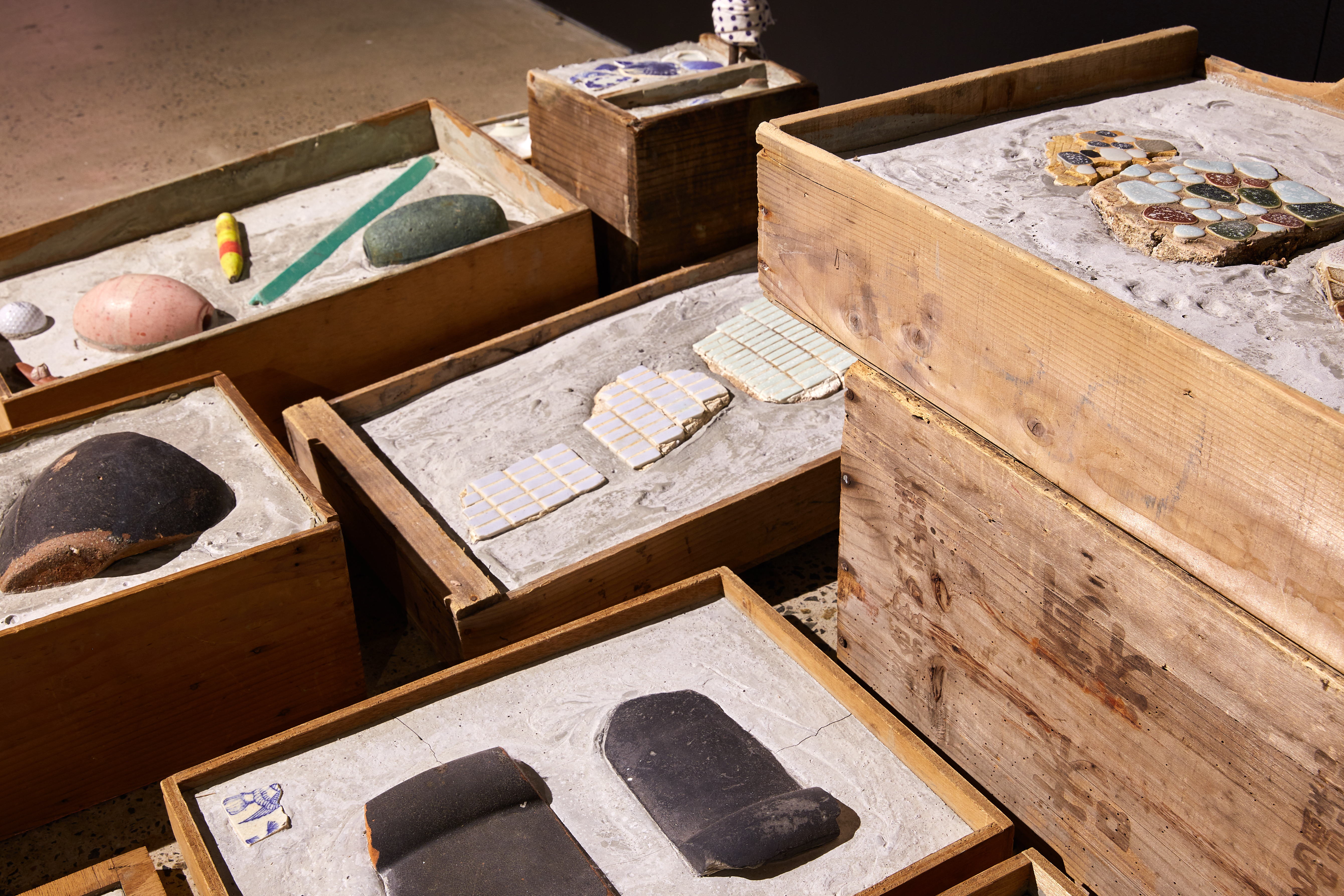
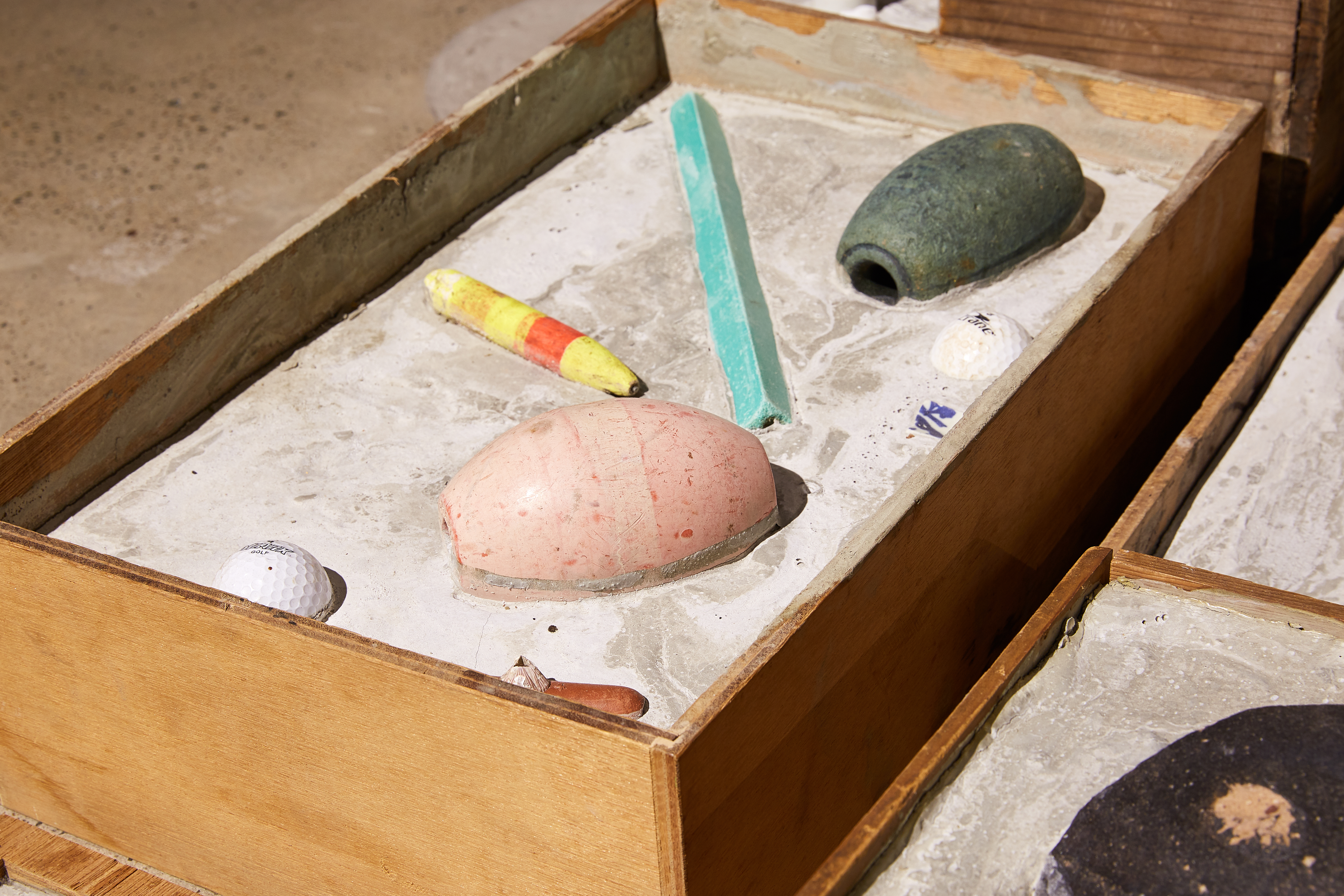
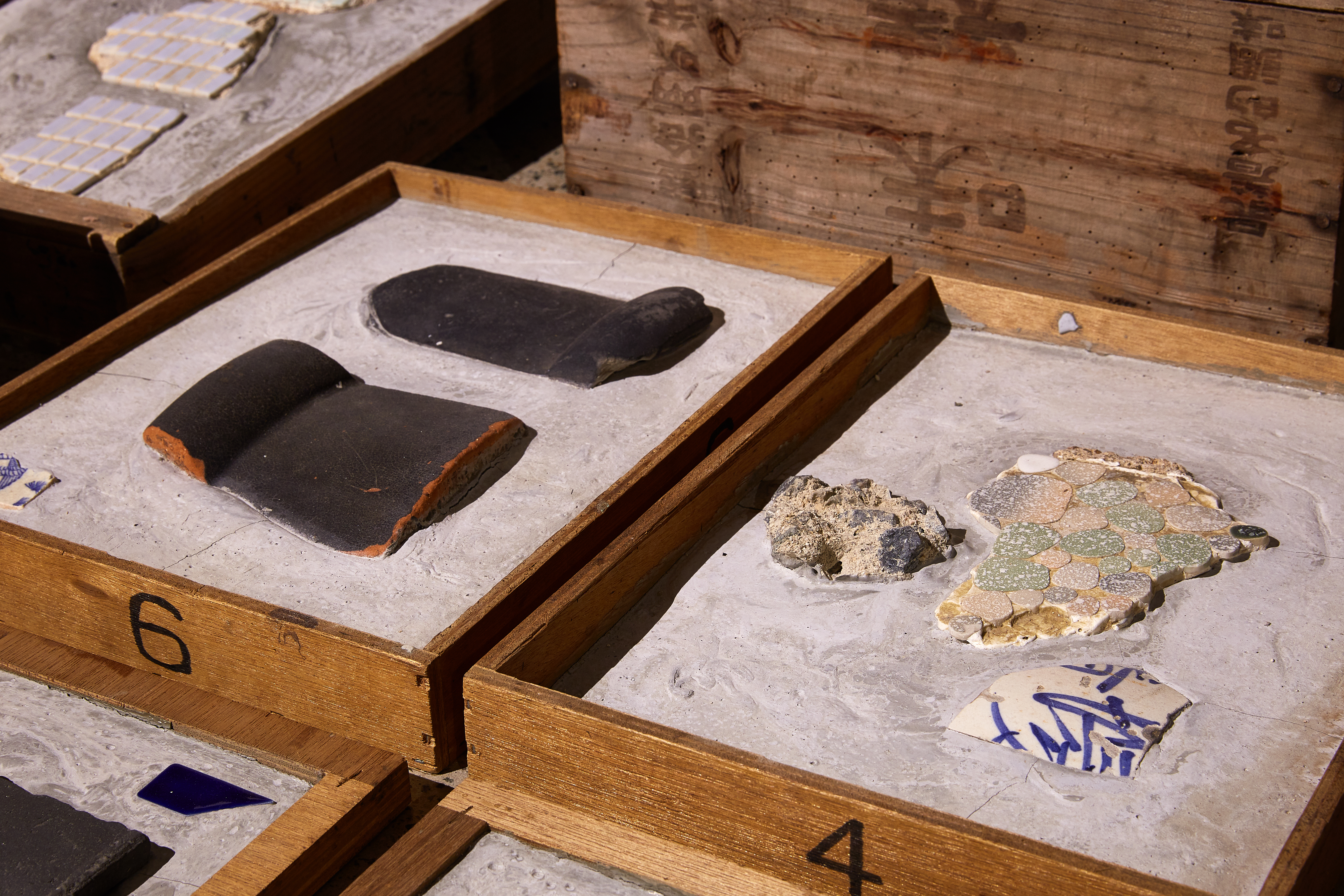
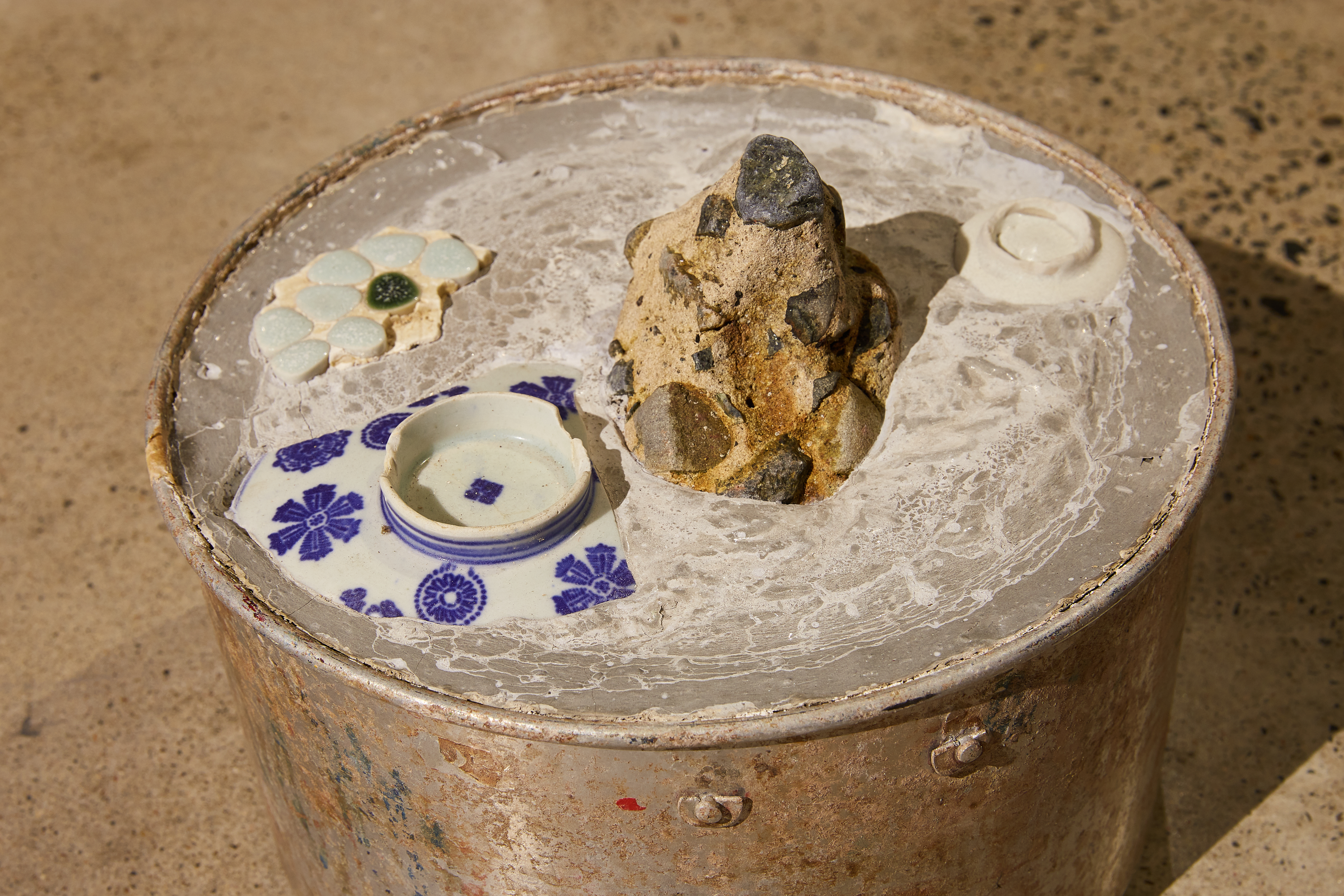
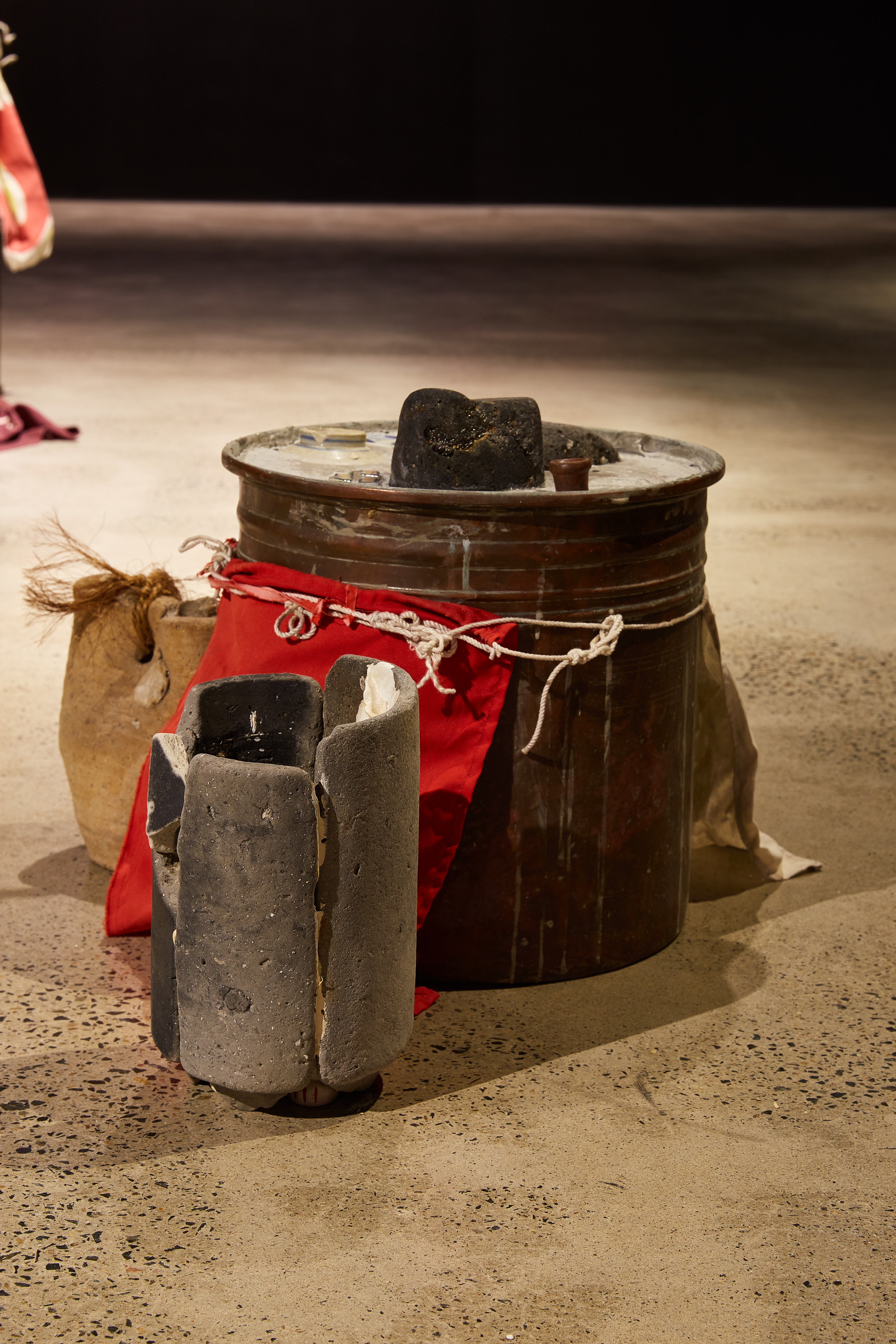
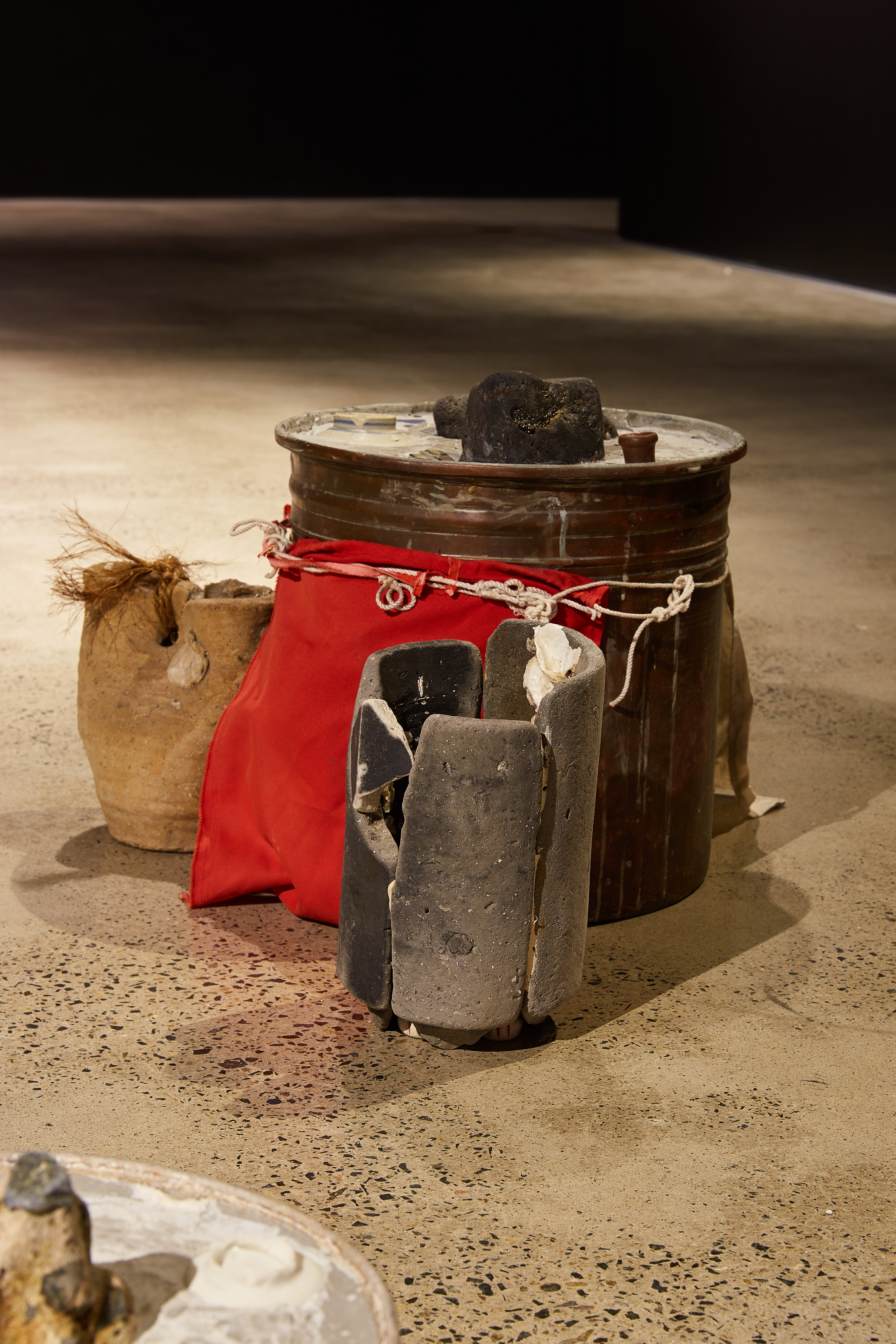
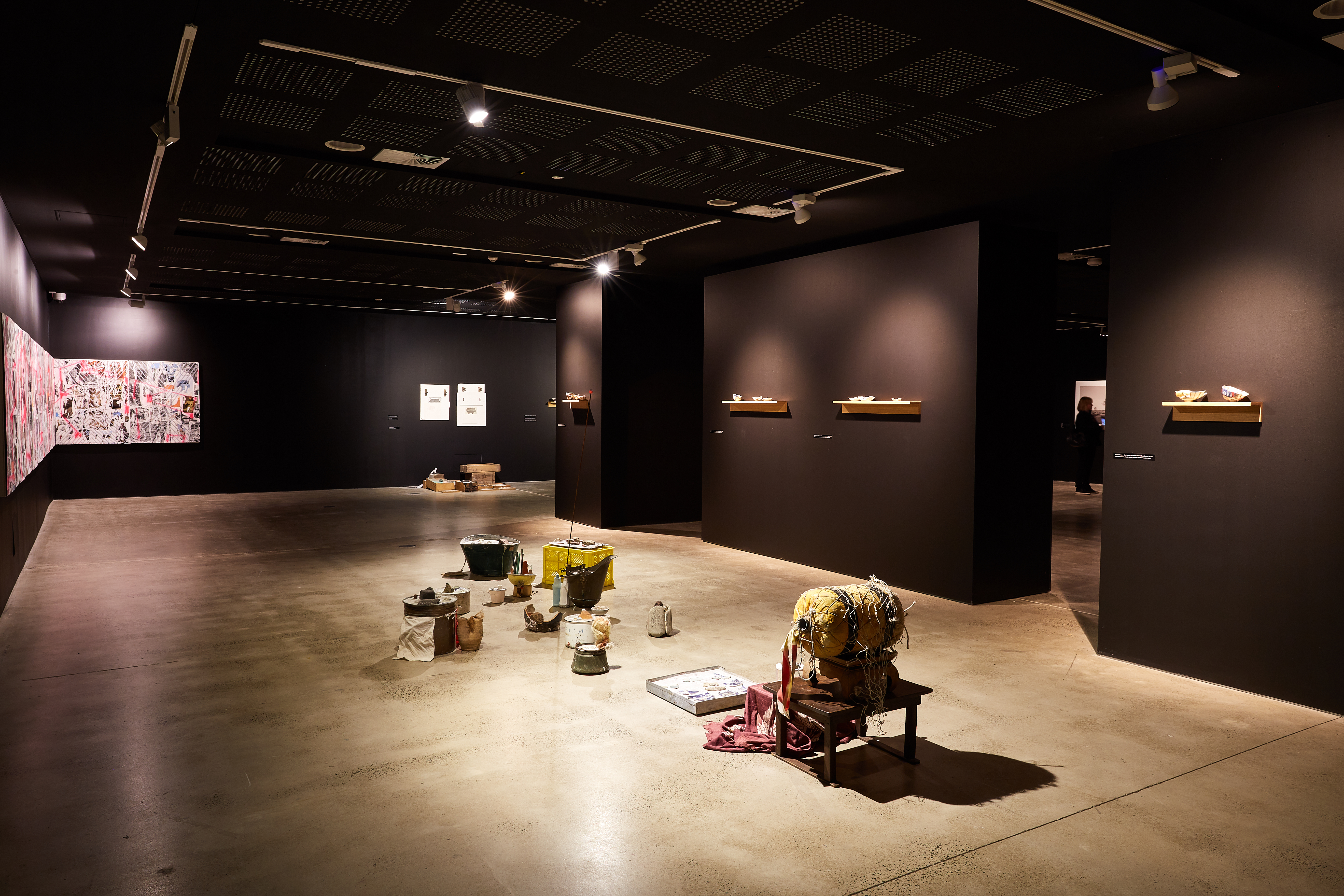
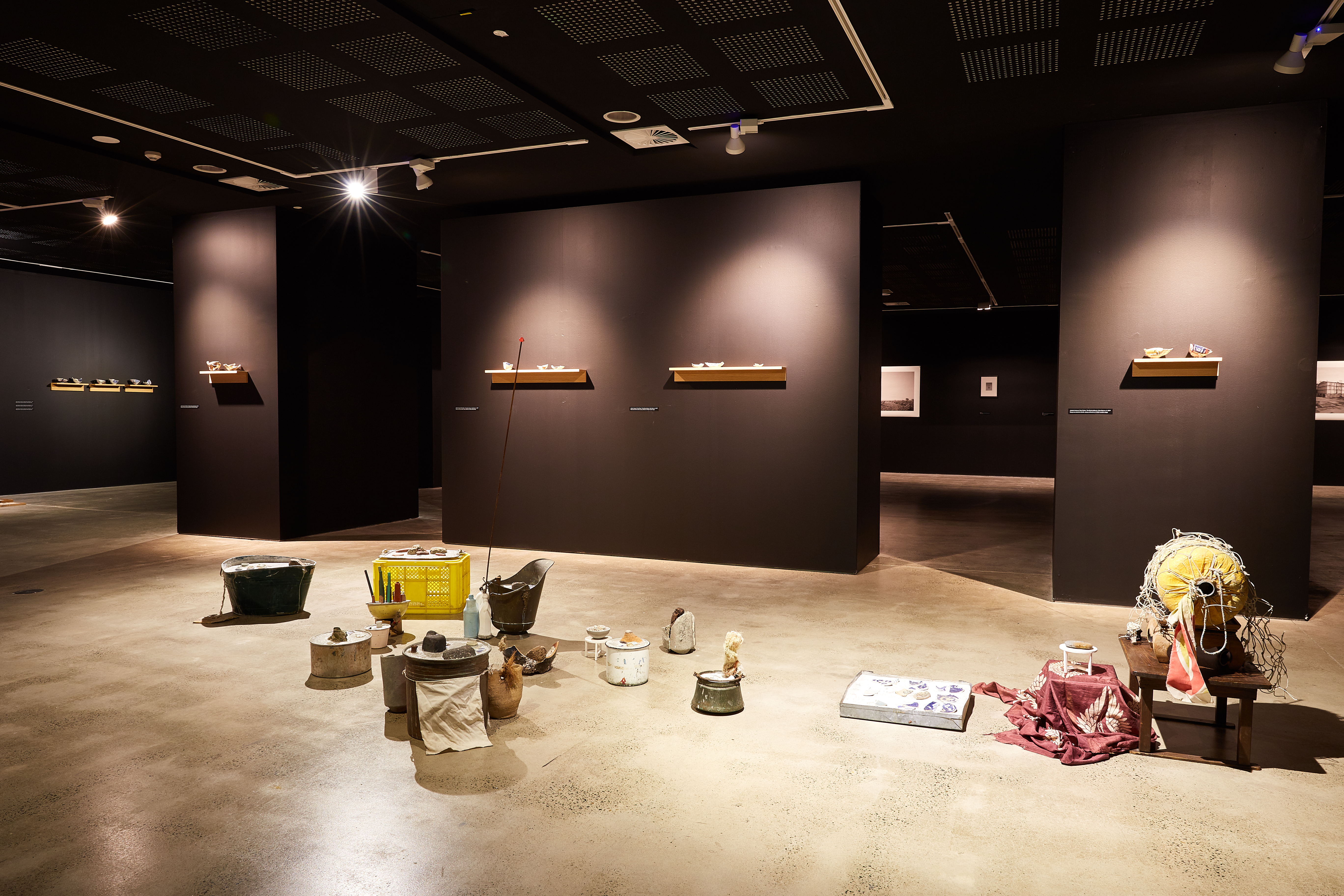
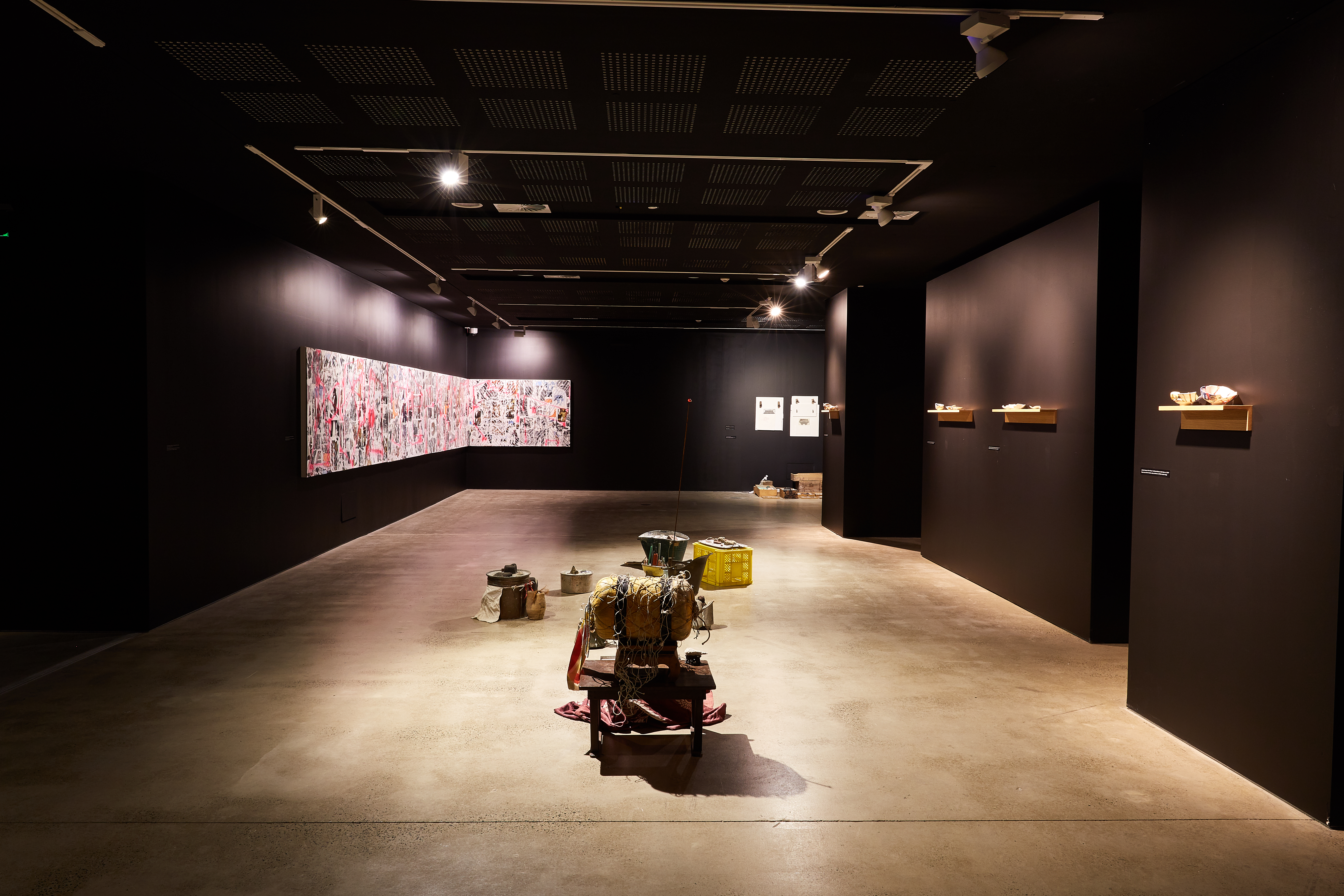
Mr Jizolark’s Concrete Data emerged in 2016, shaped by a year of quiet solitude spent living in a weathered beach shack on a small island within Japan’s Seto Inland Sea. This work, developed in dialogue with that environment, draws from a space of seclusion, reflection, and daily ritual. Central to its visual and conceptual terrain is an evocative absence—the human figure is conspicuously missing, leaving behind only traces, impressions, and the artifacts of presence. What remains is a poetic narrative inscribed through castoffs and fragments—objects displaced, weathered, and recontextualized through acts of collecting and reassembling.
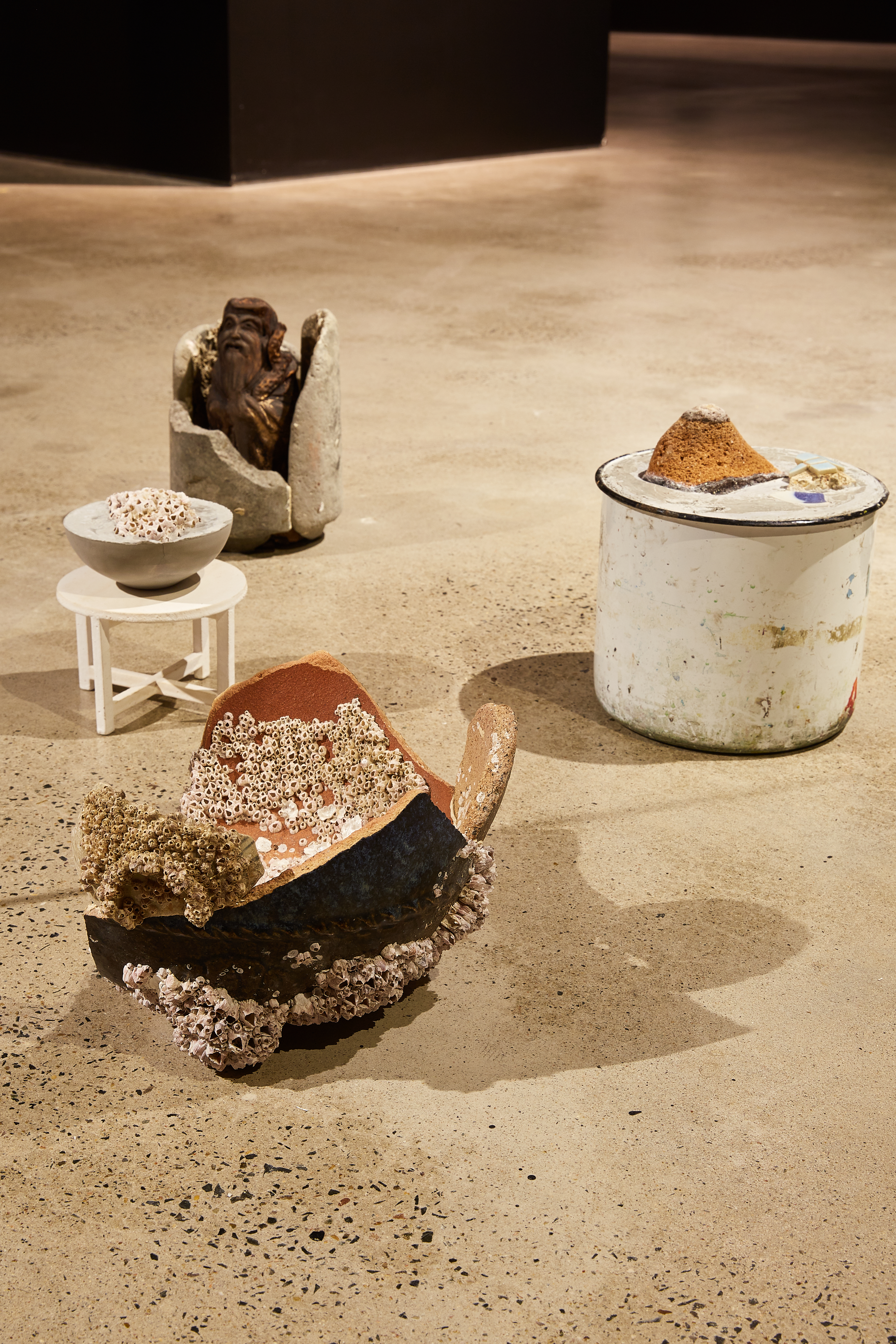
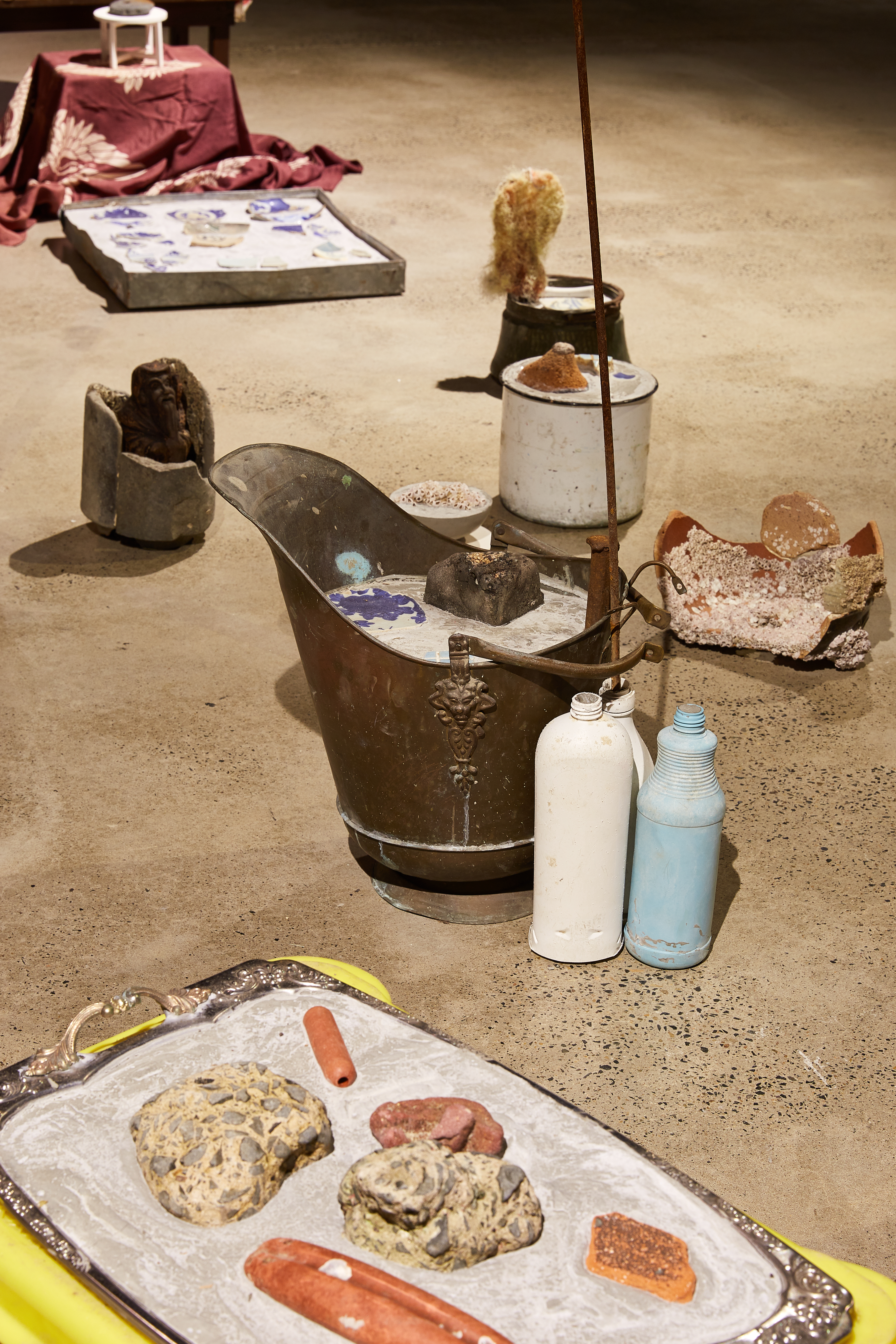
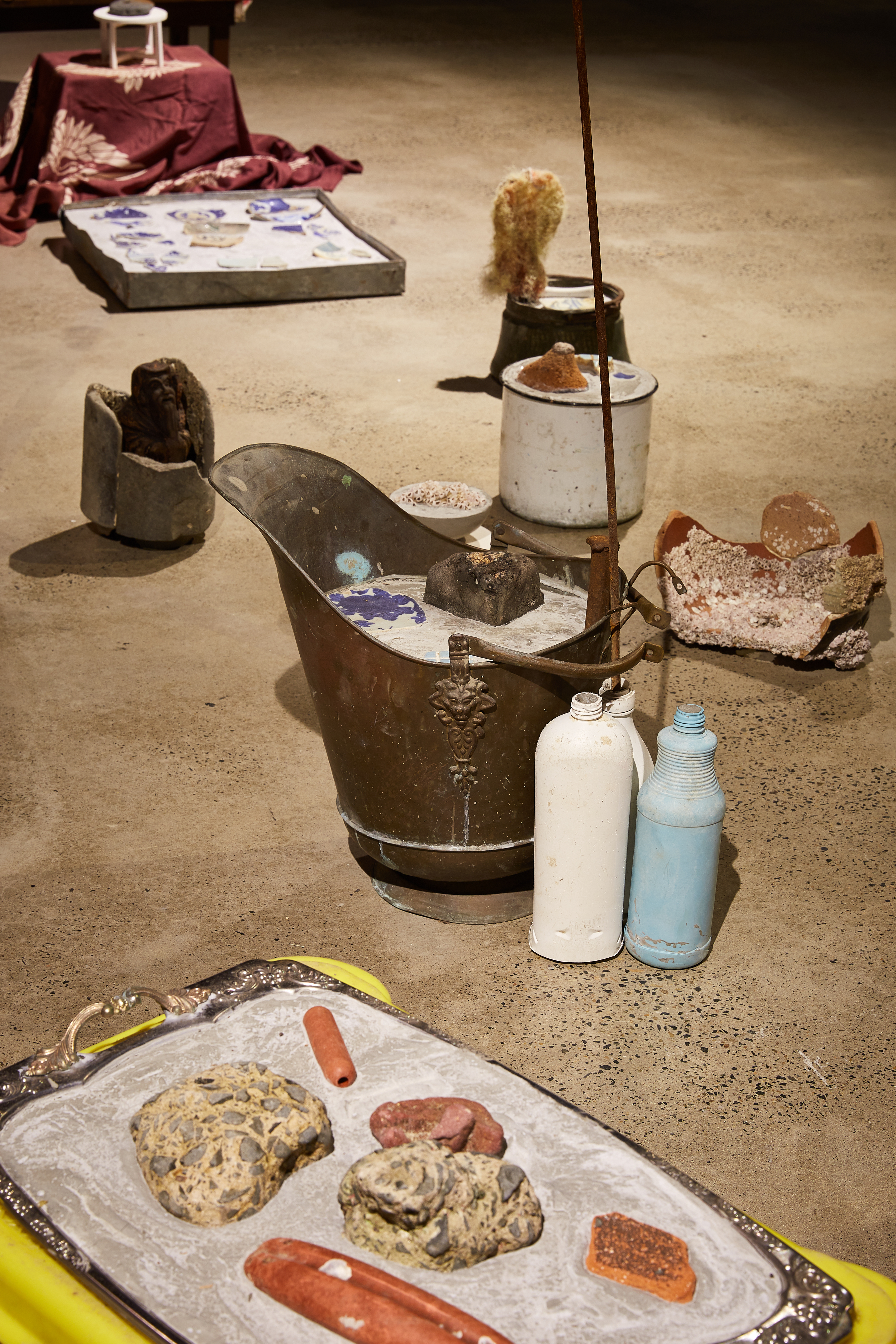
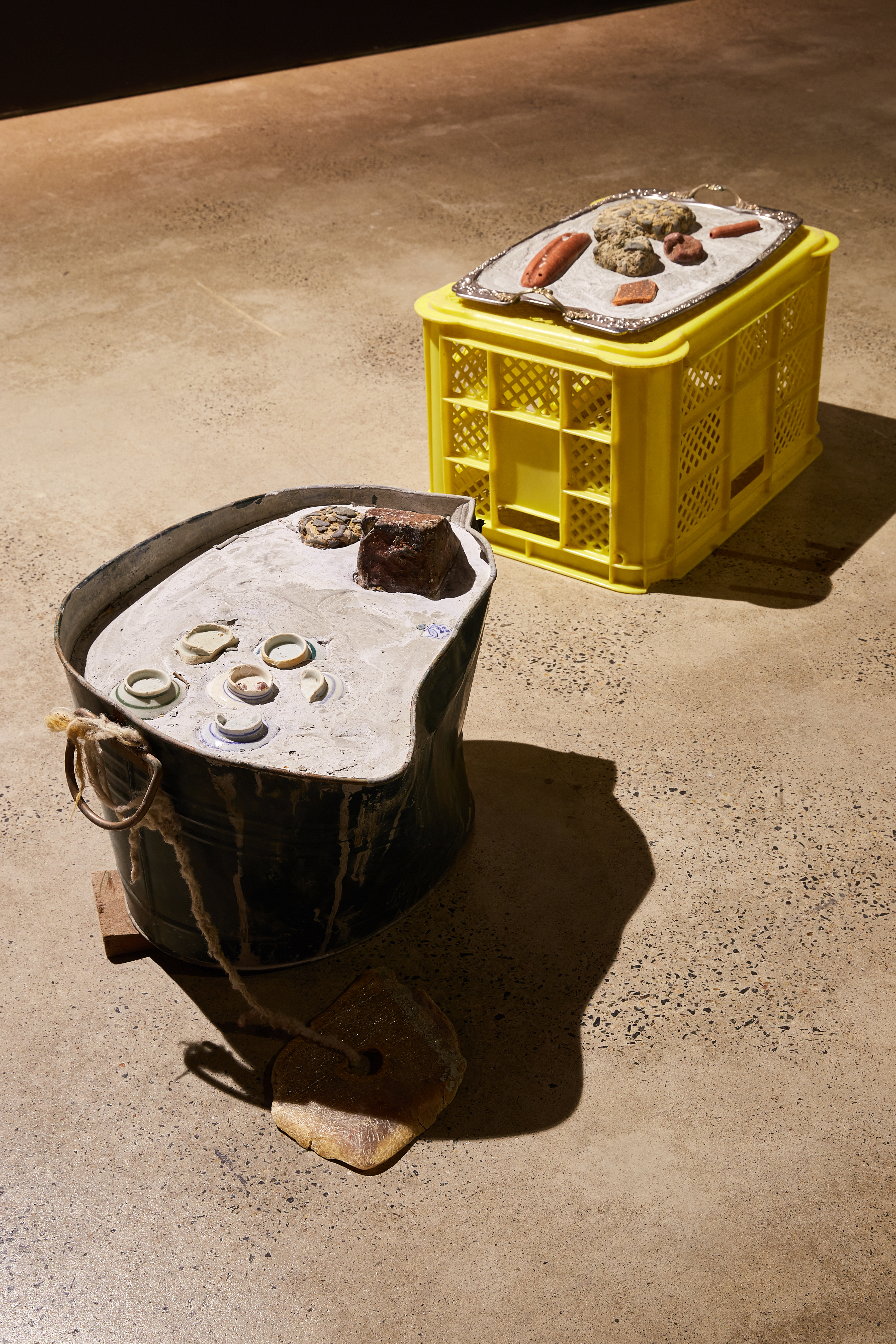
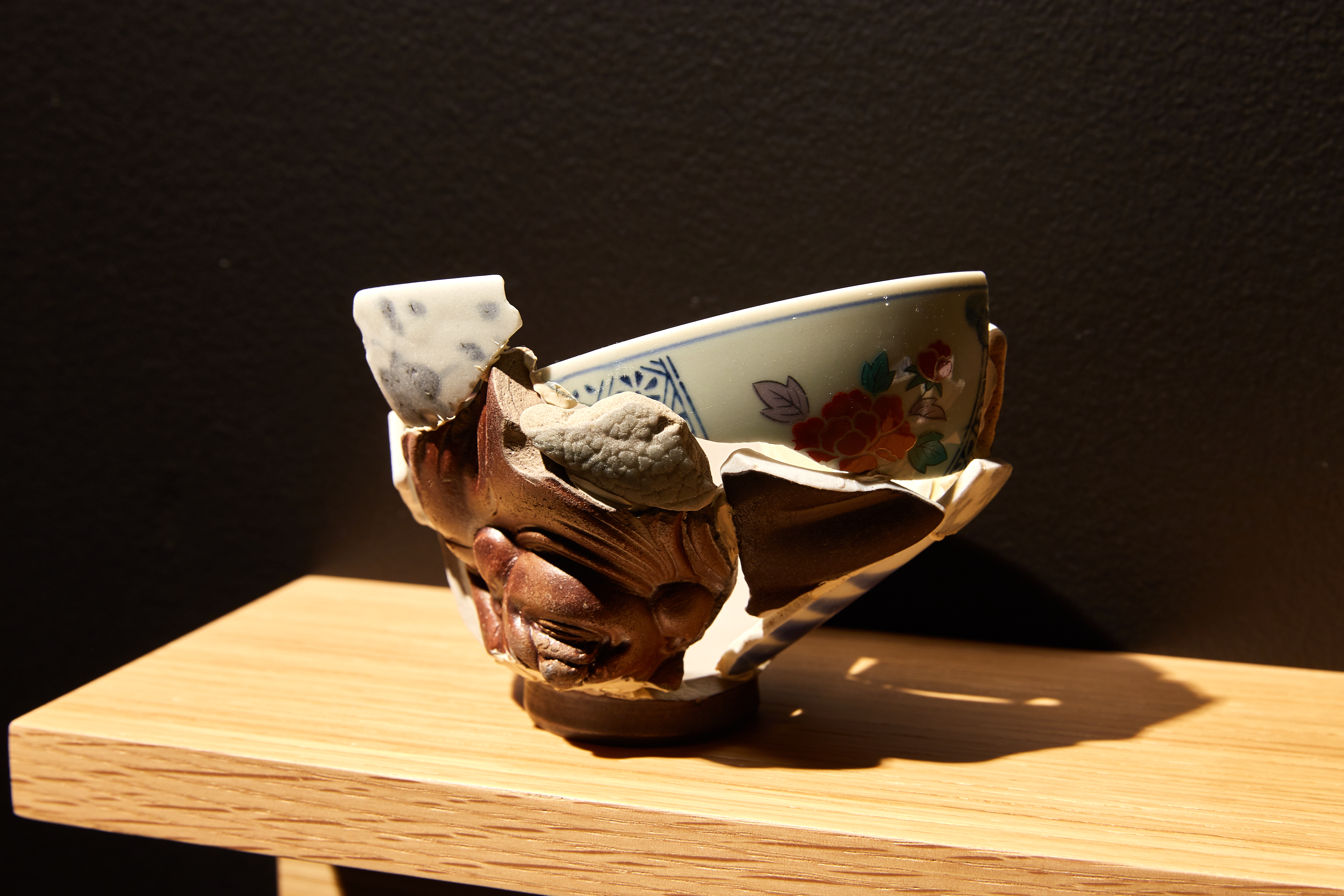
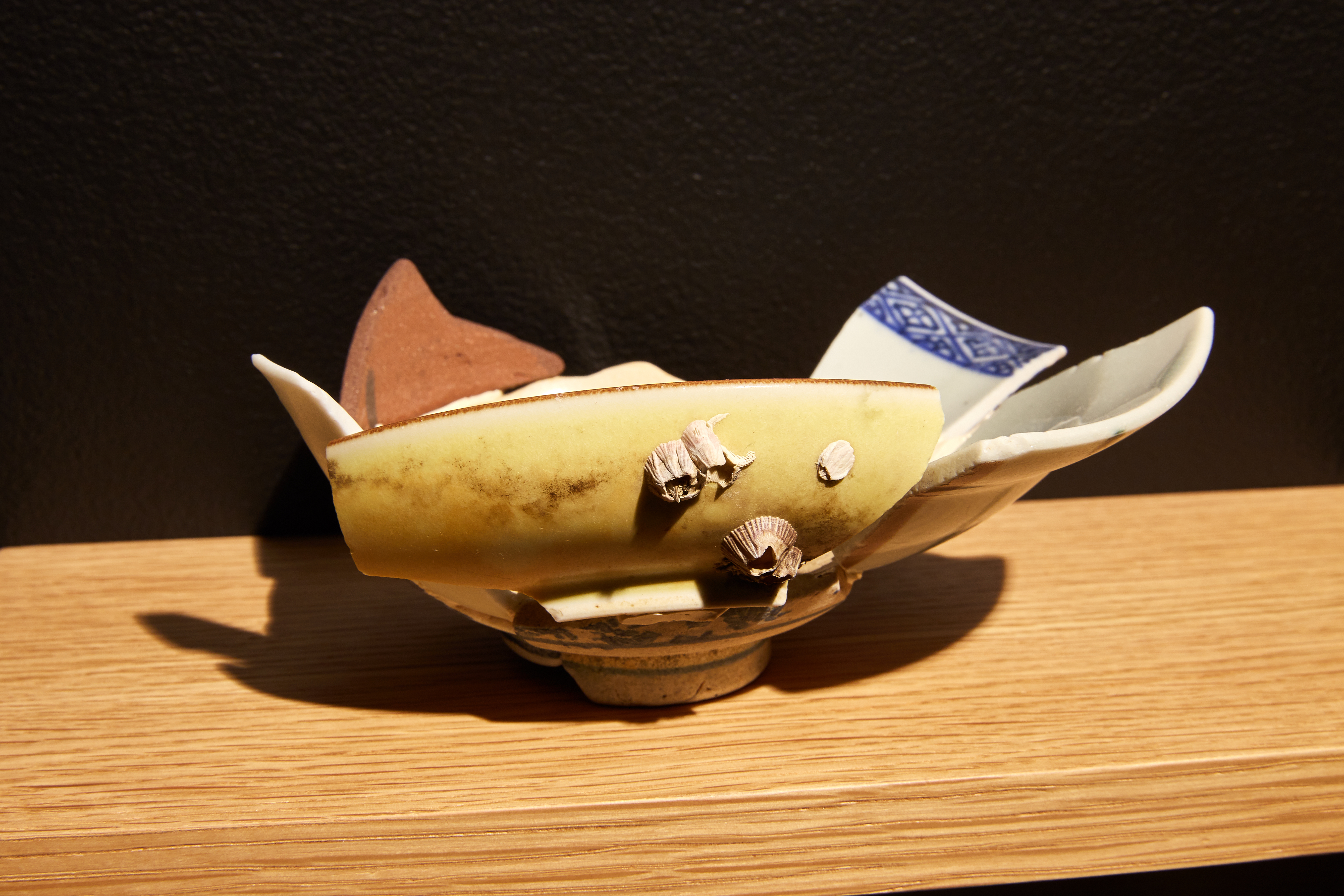
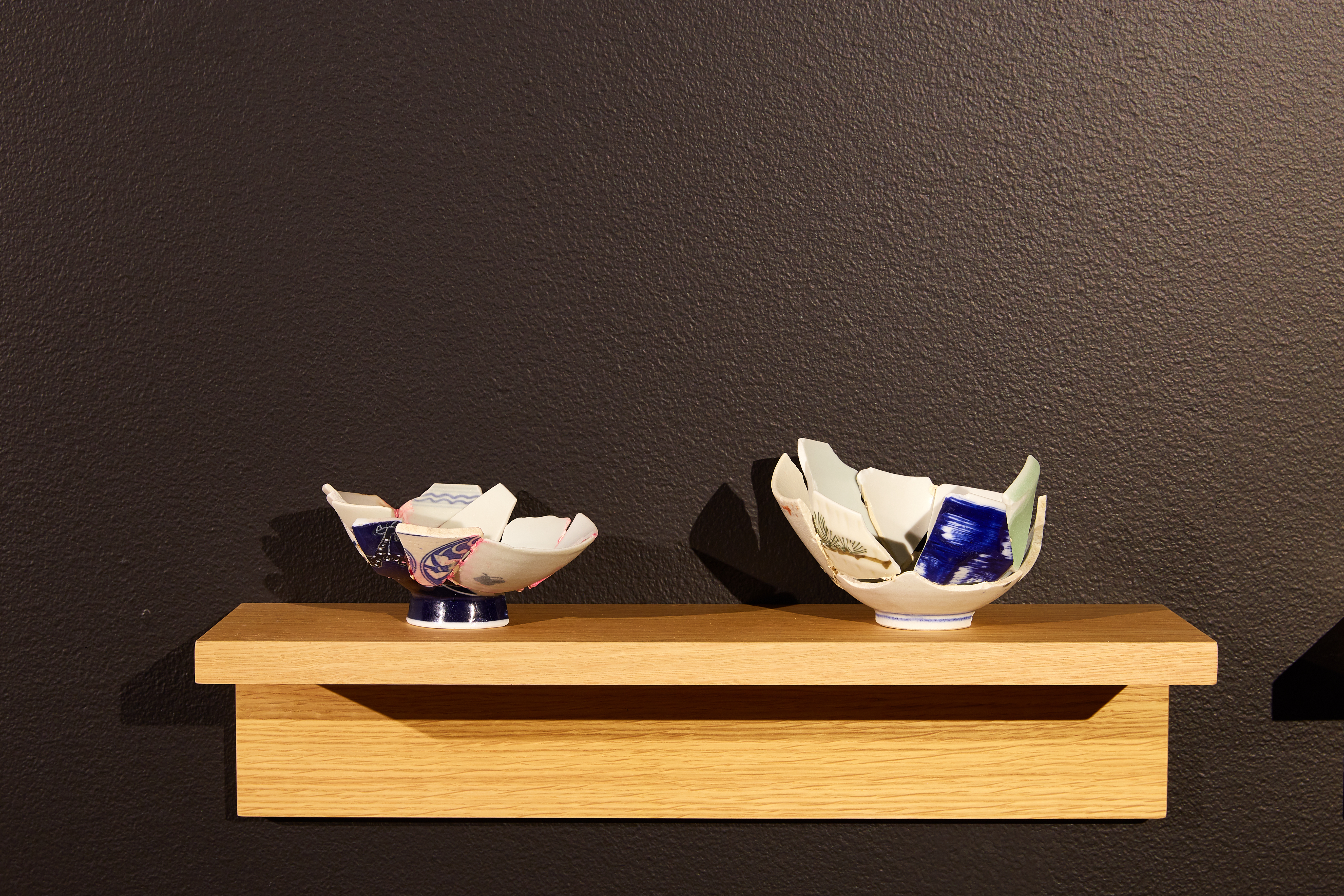
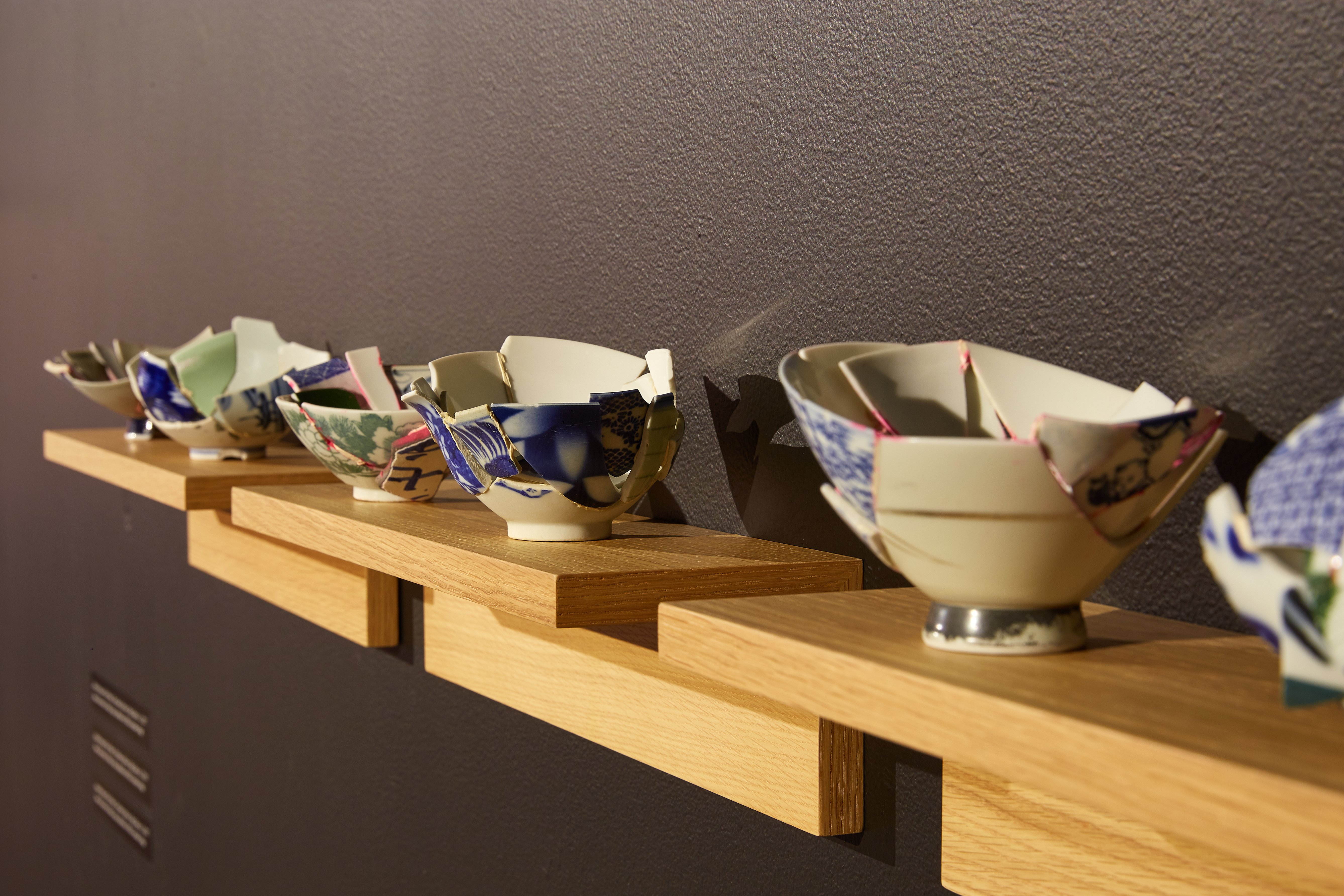
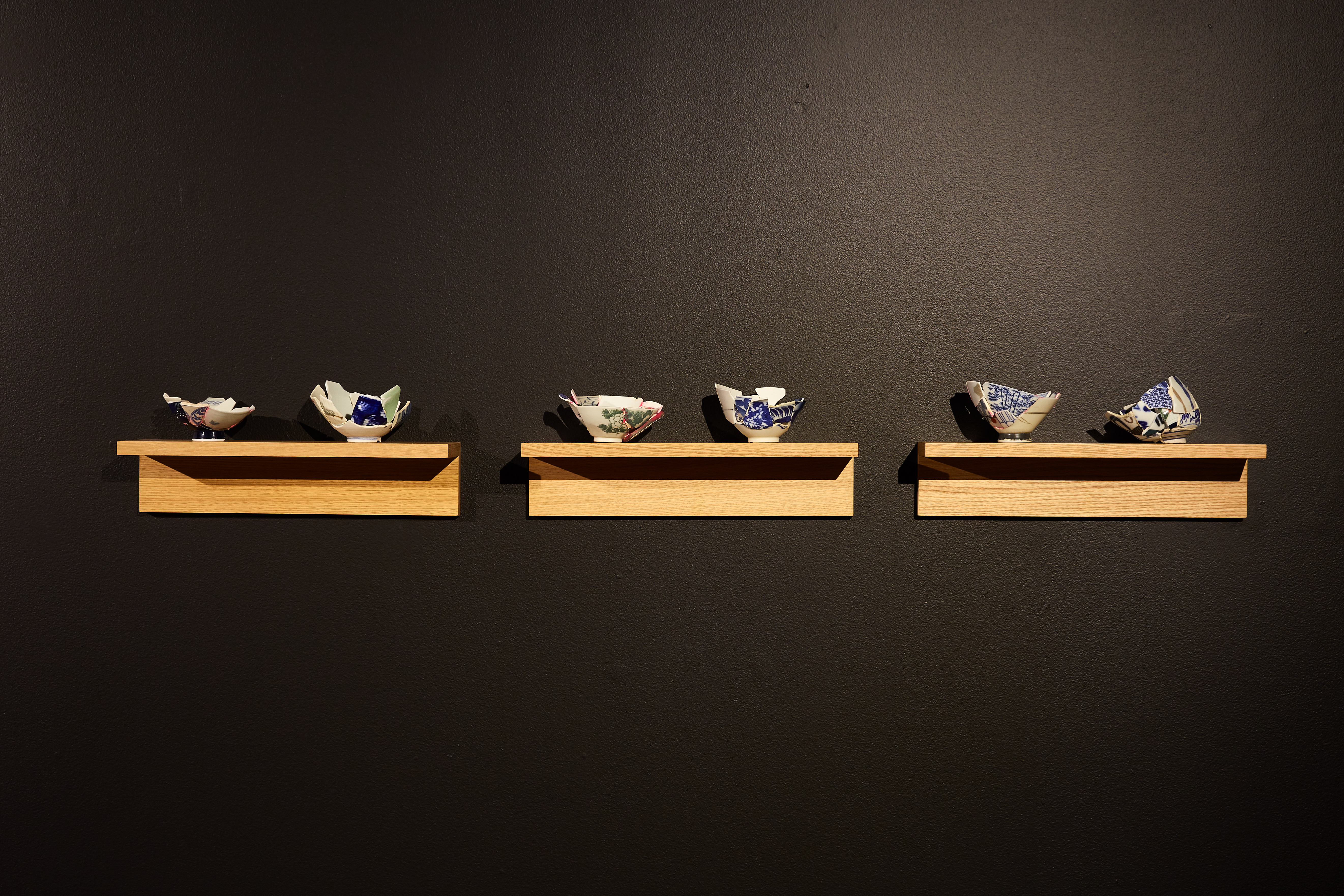
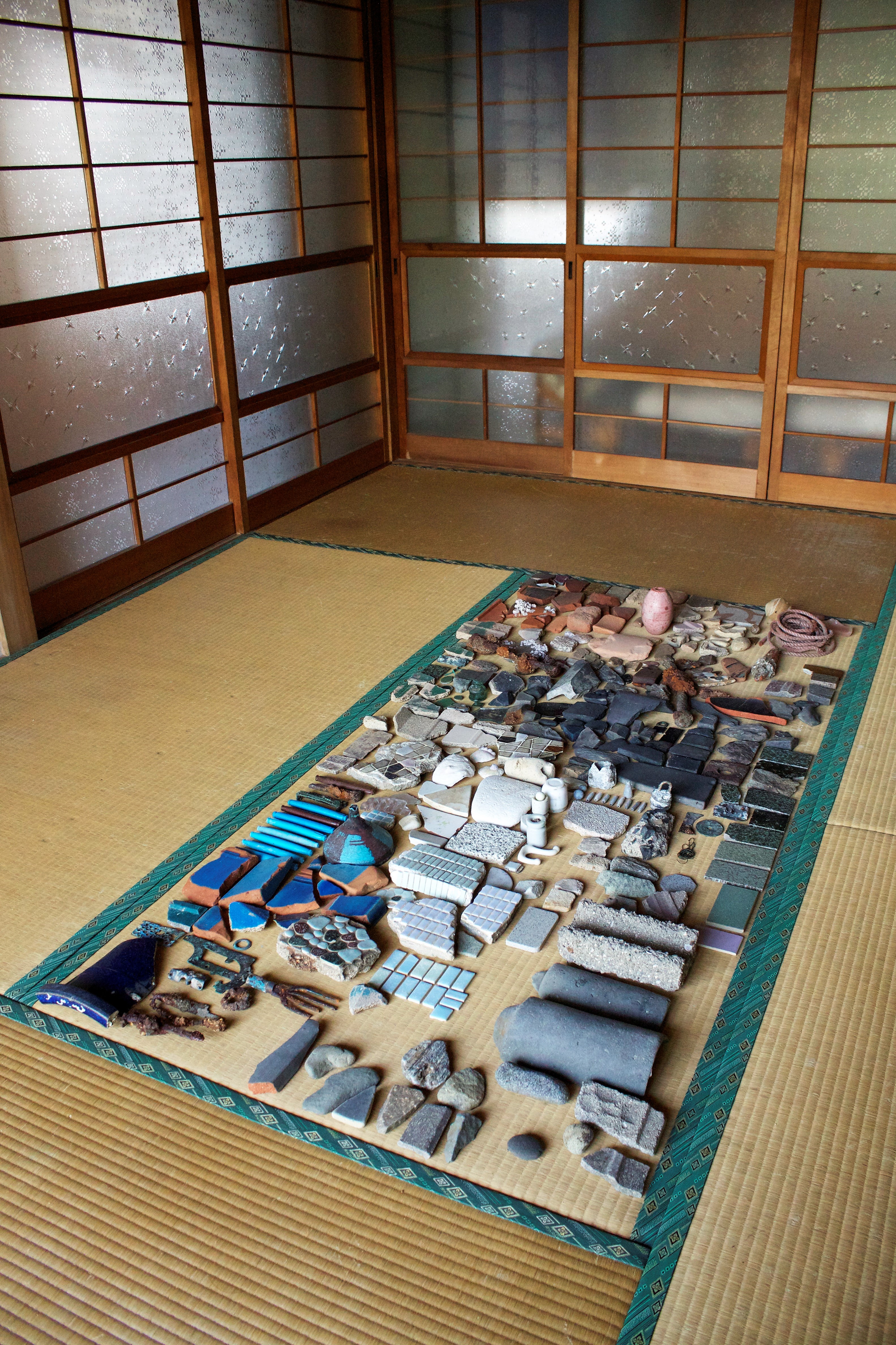
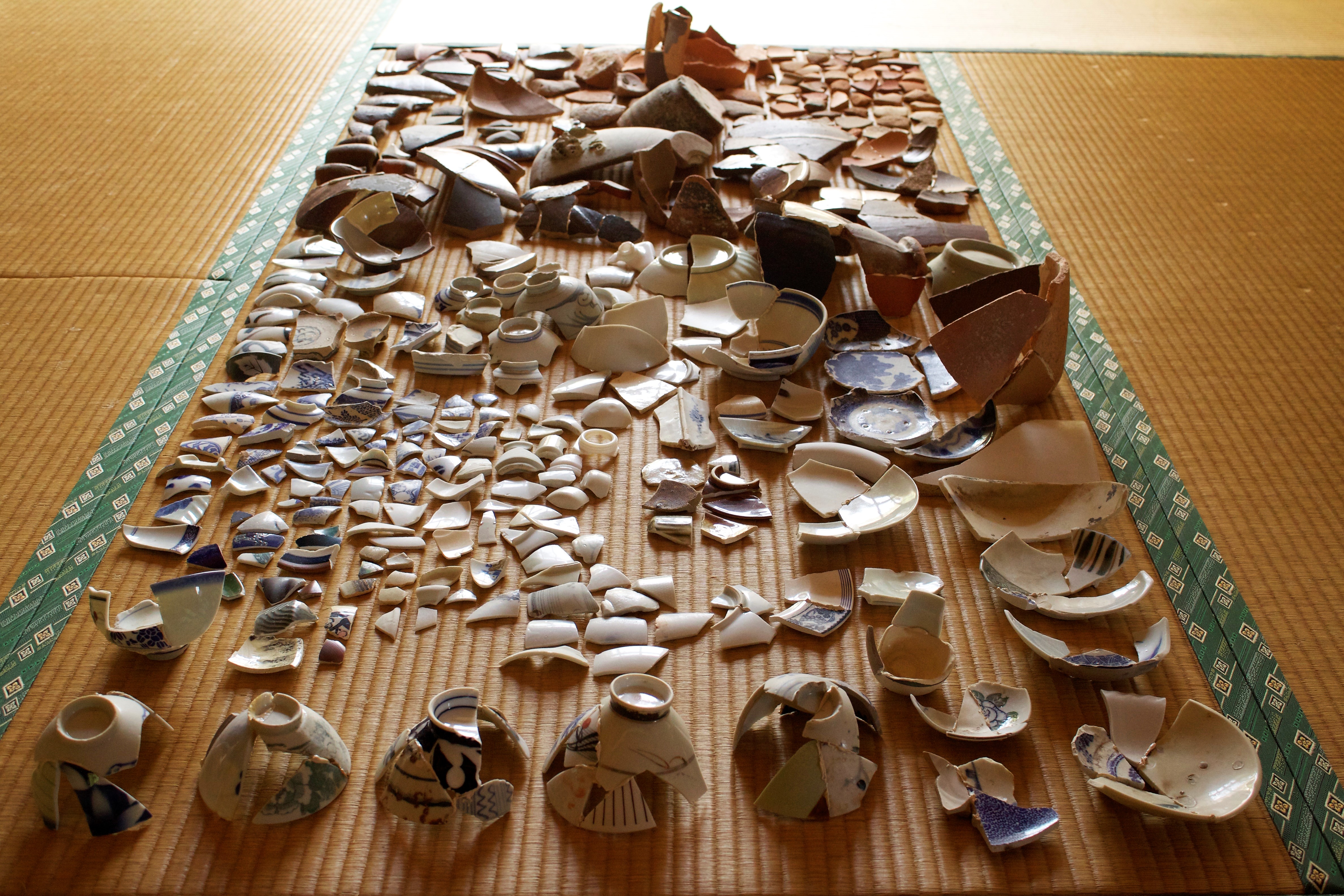
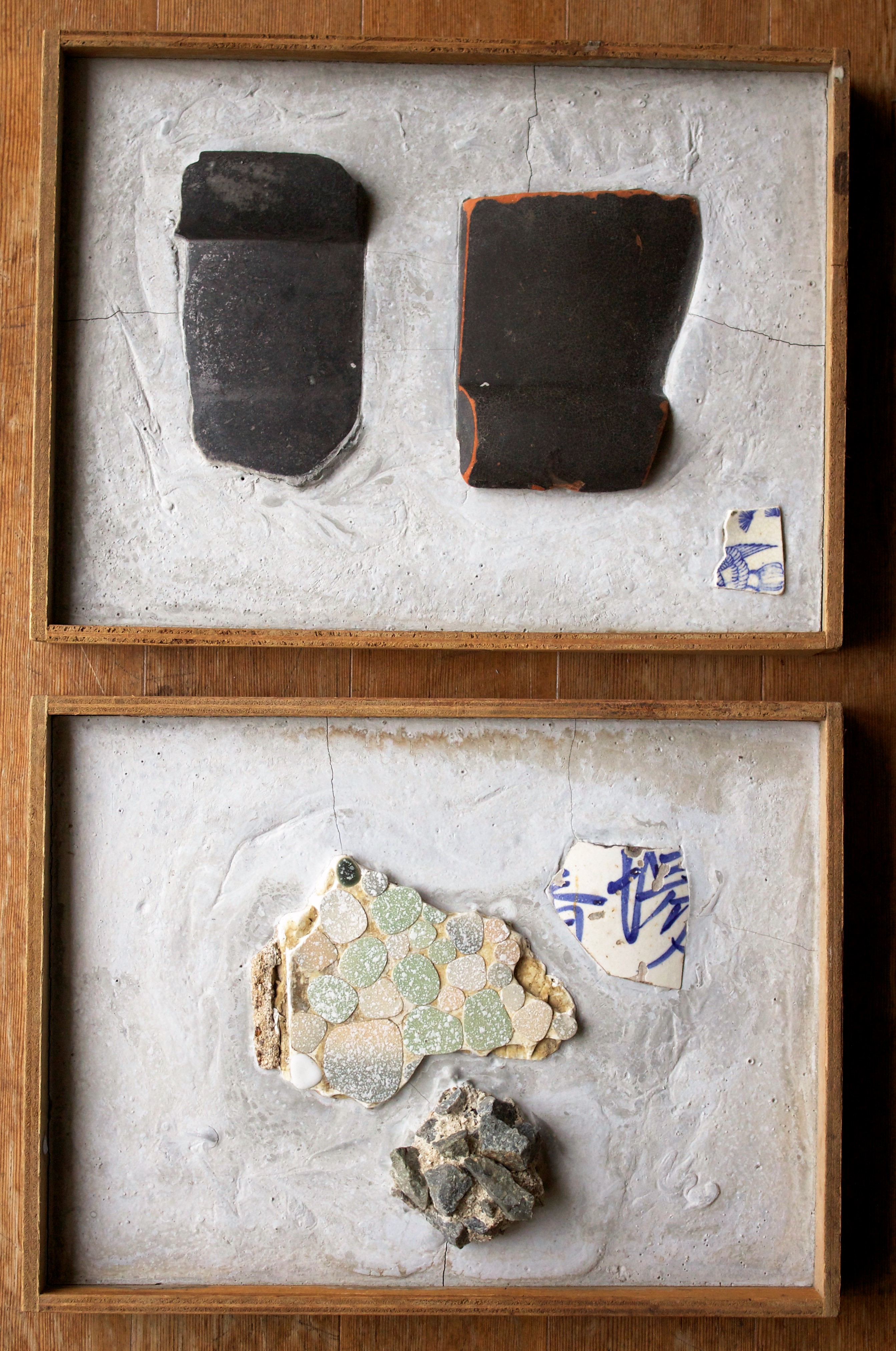
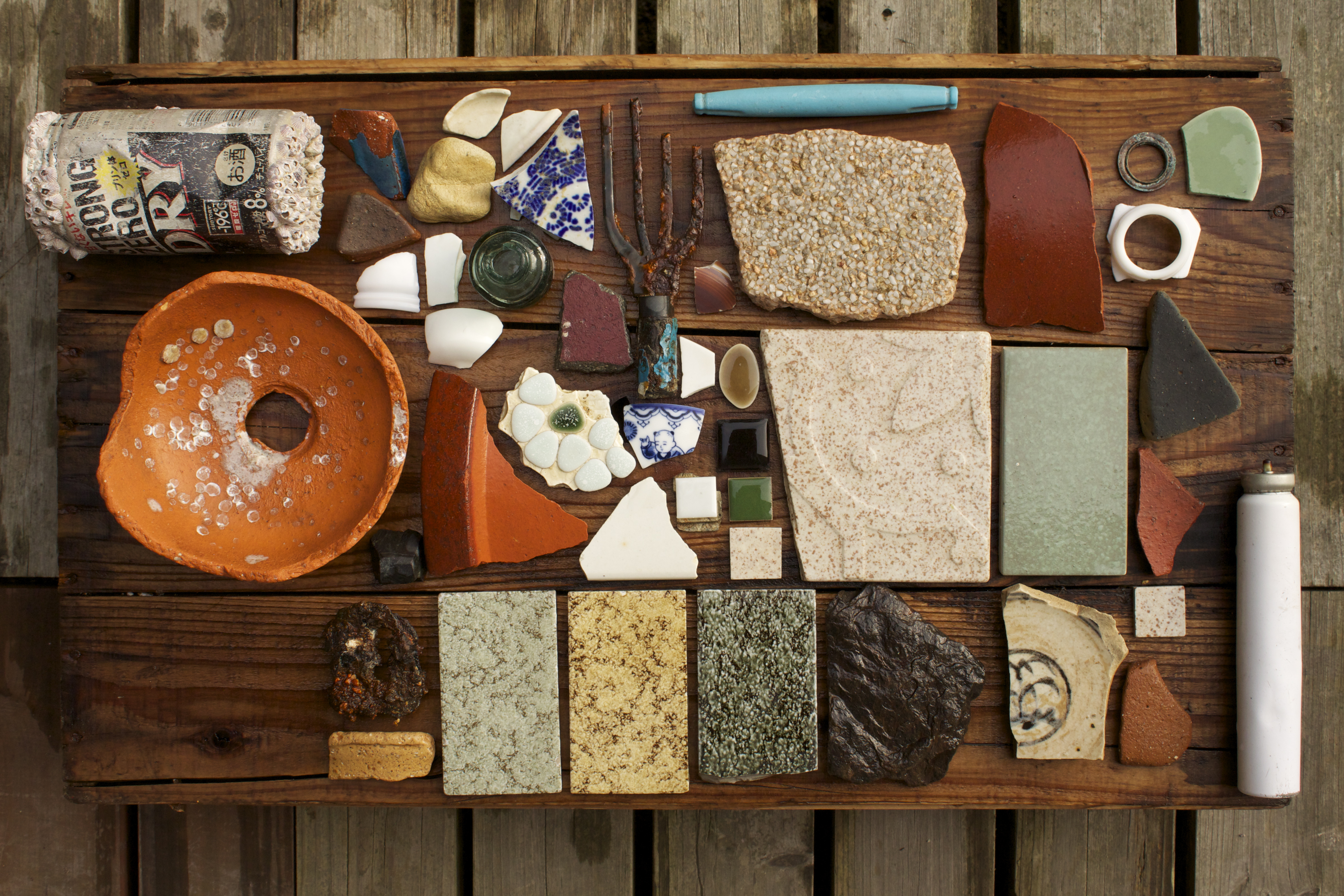
Each piece functions as a constructed arrangement: a composite of object, image, and cultural residue found along the shoreline during daily walks. These configurations speak to a layered history – at once personal and collective, ephemeral and enduring. Bottles, driftwood, fishing gear, plastic remnants, ceramic shards – all become materials through which to explore time, loss, and the quiet resonance of forgotten things. The practice resists nostalgia, instead embracing a kind of archaeological poetics, where meaning is neither fixed nor imposed but gradually revealed through encounter and reconfiguration.
Living in isolation brought clarity to a paradox at the heart of the work: the tension between collecting and letting go. Traditionally, collection implies accumulation, the desire to preserve and possess. But Mr Jizolark proposes an alternative ethos – one shaped by impermanence and detachment. Objects are considered, reclaimed, and displayed, yet never claimed. They are not owned but temporarily curated, offered up in a gesture that mirrors the sacred rituals of showing and seeing. The act becomes ceremonial – less about the object itself and more about the conditions under which it is seen.
Within this stage of presentation, the utility of the object fades. We are left with partial impressions, fragments stripped of function but not of meaning. Their worn edges, faded surfaces, and broken forms suggest former lives without disclosing specifics. As viewers, we are invited to contemplate, to sense rather than define, to enter into a kind of empathic regard. The spiritual becomes embedded in the mundane.
A strong material preference emerges throughout: for the forgotten, the broken, the humble and the weather-beaten. These are consumer relics, softened and altered by the sea and time. Their appeal lies in their layered histories, in what the Japanese term mono no aware—an awareness of the impermanence of things, and the bittersweet beauty that resides in transience and decline. The objects, simple and fragmentary, are not redeemed by transformation, but by attention. They are not made precious by rarity, but by the tenderness of their re-presentation.
Mr Jizolark’s Concrete Data is, in essence, a quiet meditation on presence, memory, and relinquishment. It is a work that honours the sacred in the discarded, the symbolic in the ordinary, and the profound in what is nearly gone.


















 morgan veness