
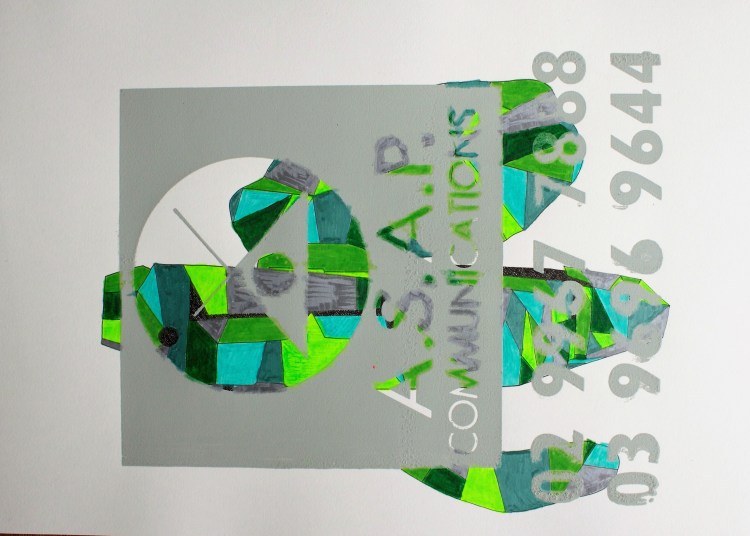
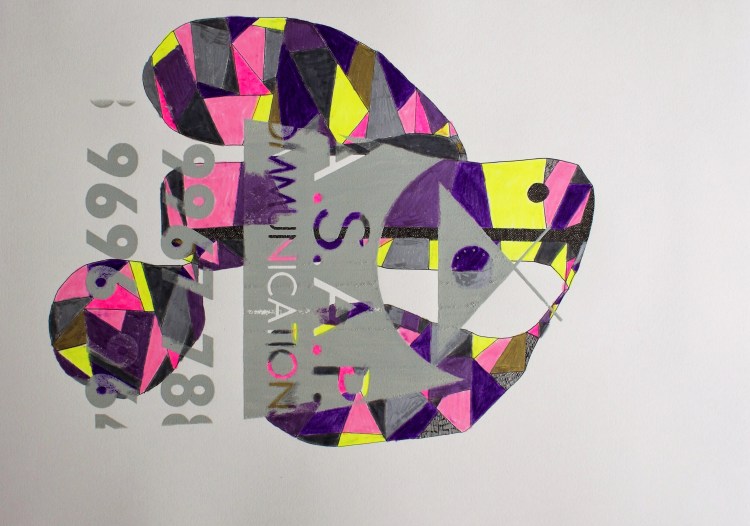
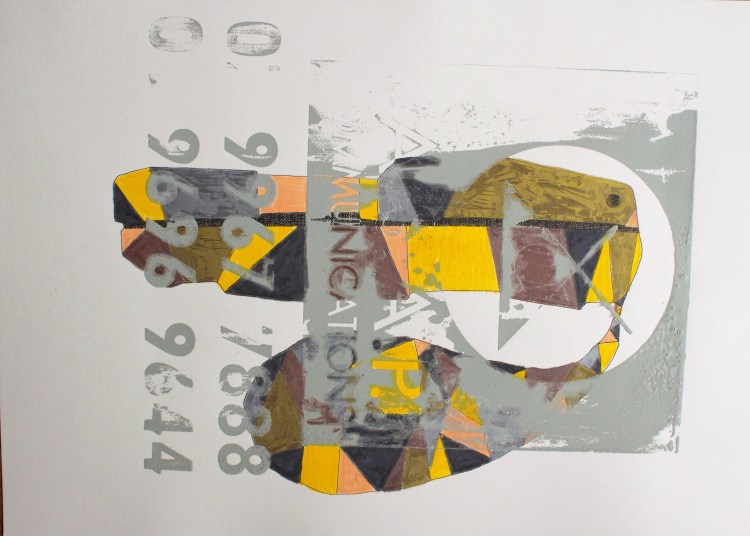
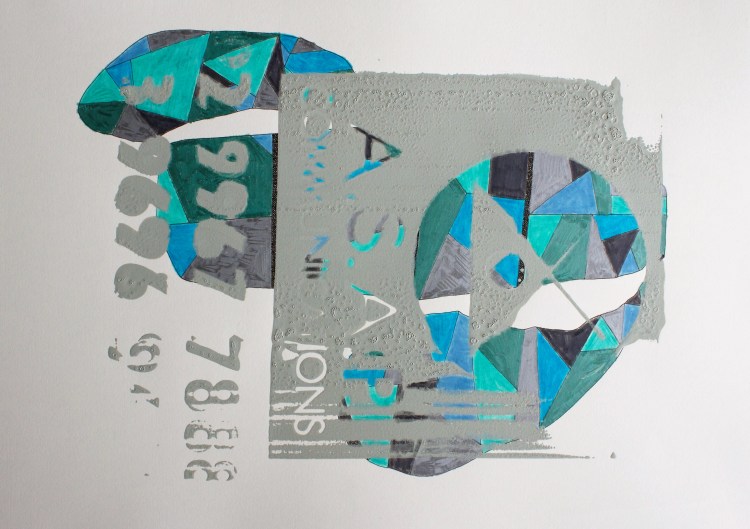
Boom, Boom, Treasure Hunters (2011) are a progressive series of works rendered in acrylic paint and coloured pencil on paper. Conceived during a period of close observation and reflective engagement when I first returned to Sydney after living in Japan in 2011.
The series continued to grow from a sustained exploration of the peculiar and often overlooked shapes that subconsciously define the urban landscape. Rather than documenting the iconic or the monumental, these works chart the minor anomalies of place: the awkward, the obsolete, the remnants that quietly persist in the visual periphery.
Each composition features a constellation of floating objects—disconnected from linear time or narrative, yet symbolically charged. These forms are drawn from the detritus of yesteryear: collapsed forms, sunken shapes, derelict designs, rust-streaked remnants, and fragmented fractures. They hover, drift, or appear suspended across the surface of the work, sometimes clustered, sometimes isolated, yet always in tenuous relation to one another.
What distinguishes this iteration of Boom, Boom, Treasure Hunters is the integration of a printed monotone configuration – an abstract field composed of textual and numerical symbology. This over layer acts as both structure and cipher, evoking administrative systems, industrial coding, or archival order. Its presence introduces a tension between the formal and the ephemeral, suggesting that the chaos of lived experience is always, in some way, measured, recorded, or misread through the lens of bureaucracy and design. The overlay of text and number becomes a kind of institutional wallpaper – imposing, impersonal, and yet porous enough to let memory leak through.
In this body of work, collecting becomes an act of quiet resistance – a way of reassembling the marginal and the cast off into a new visual syntax. These images do not aim to romanticize decay or fetishize the ruin. Instead, they speak to the quiet persistence of memory within the built environment—the subtle ways in which the past imprints itself upon the present through material traces, phantom forms, and urban residue.
The title Boom, Boom, Treasure Hunters suggests both the rhythm of discovery and the childlike impulse to uncover meaning in unexpected places. The “treasure” is not literal, but emotional, symbolic: a patchwork of forms that, when gathered, form a kind of map—a fragmented but coherent whole drawn from the wreckage and repetition of modern life.
Ultimately, these works serve as visual archivists. They are the keepers of unnoticed things. They remind us that what is overlooked is not necessarily lost, and that meaning is often found not in the complete, but in the collected.





 morgan veness