
Inventory (1), 2020
This work documents a collection of abandoned objects—artifacts of the everyday—chosen not for rarity or aesthetic perfection, but for the quiet integrity of their use. Each item, worn and marked by time, carries the imprint of labour, function, and handling. These are not precious things, but they have been shaped by purpose—objects once held, swung, cut upon, leaned against, or discarded.
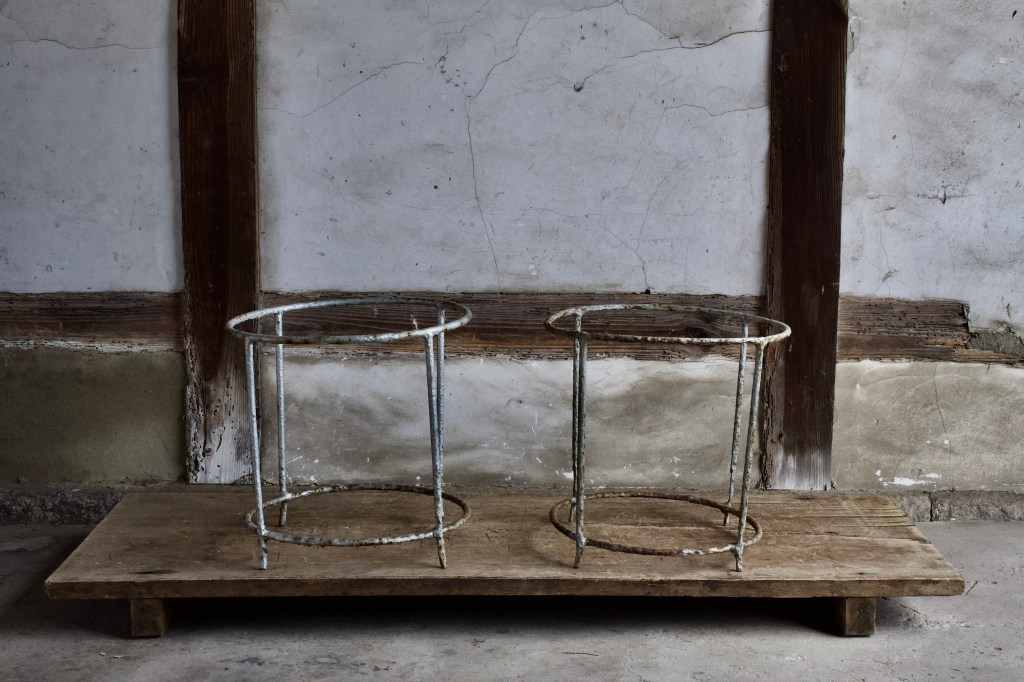
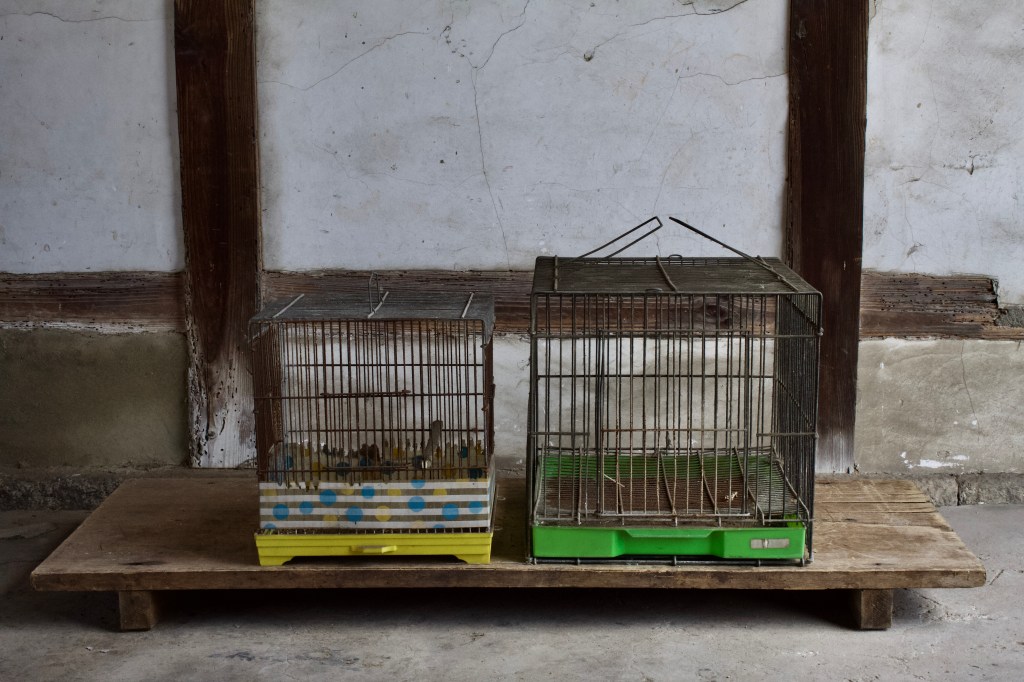
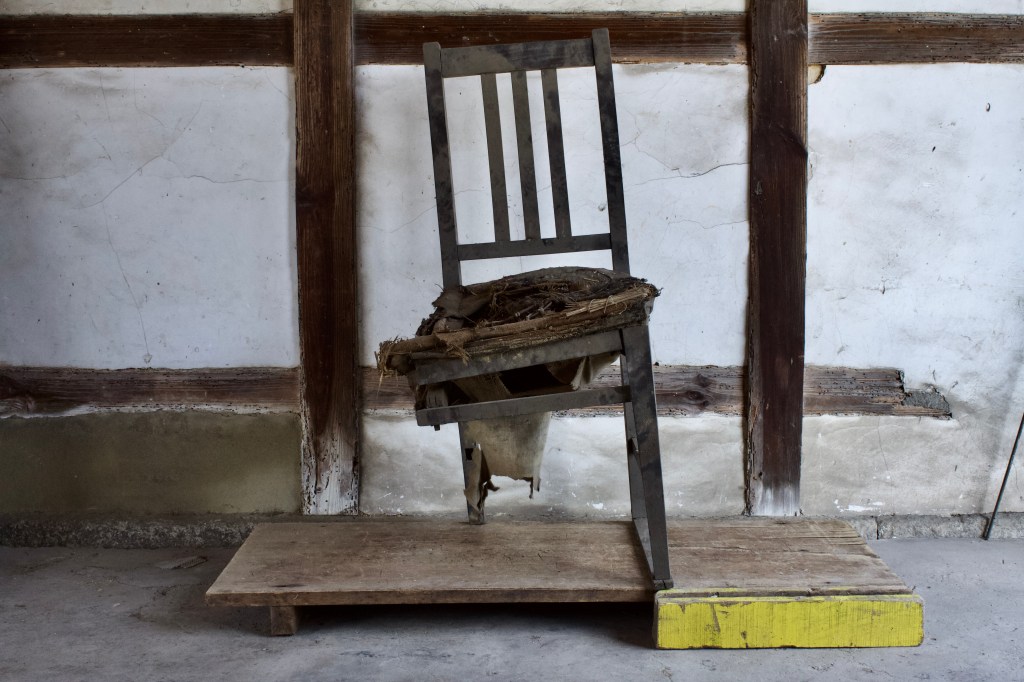
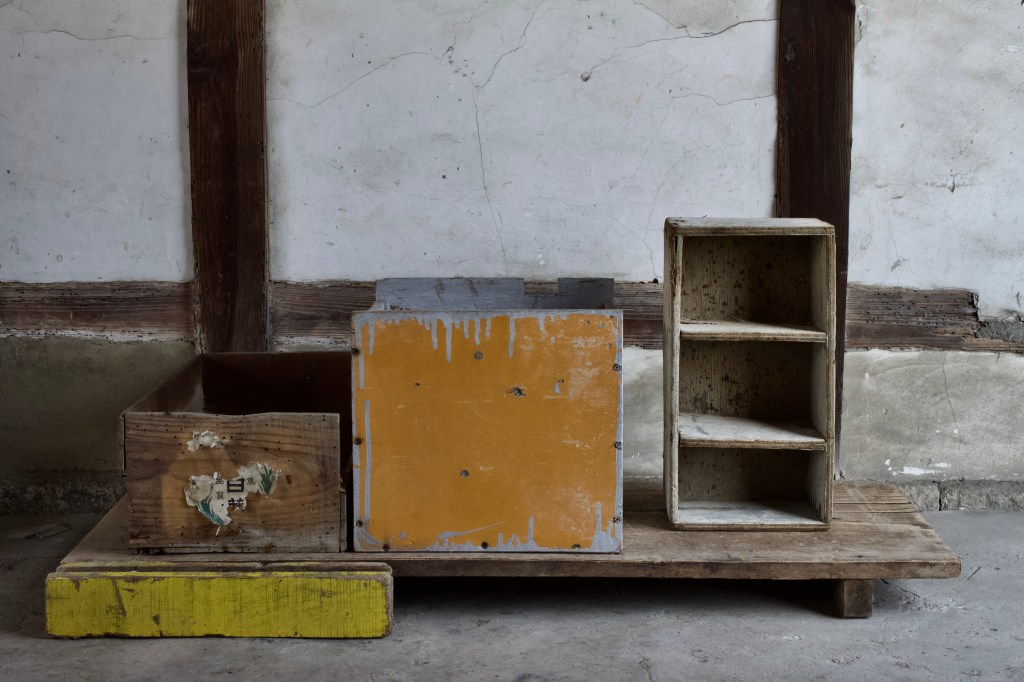
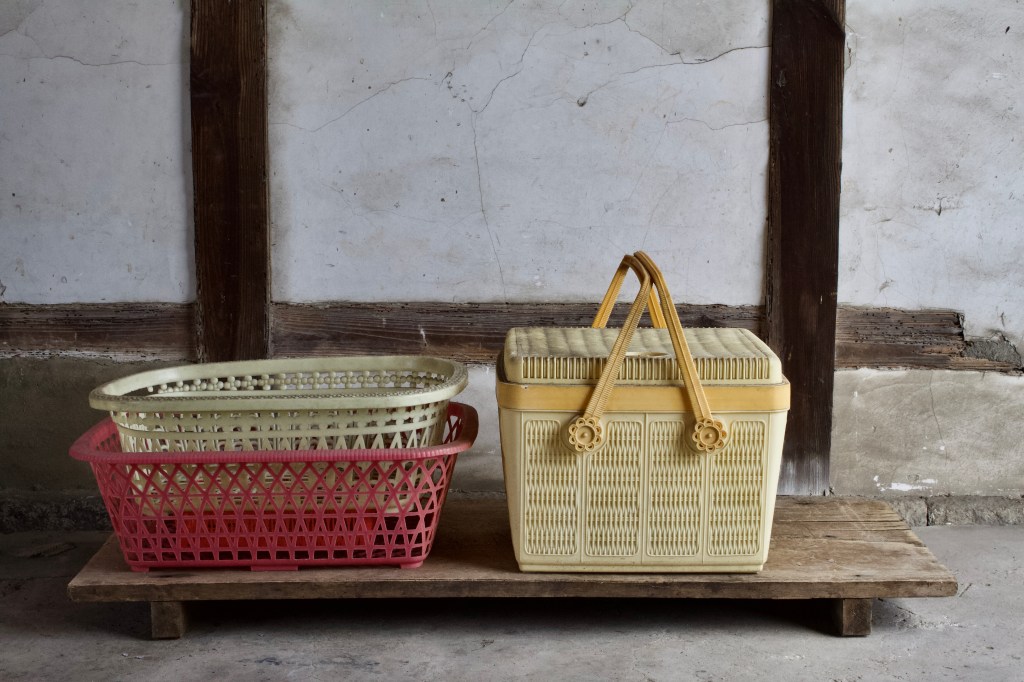
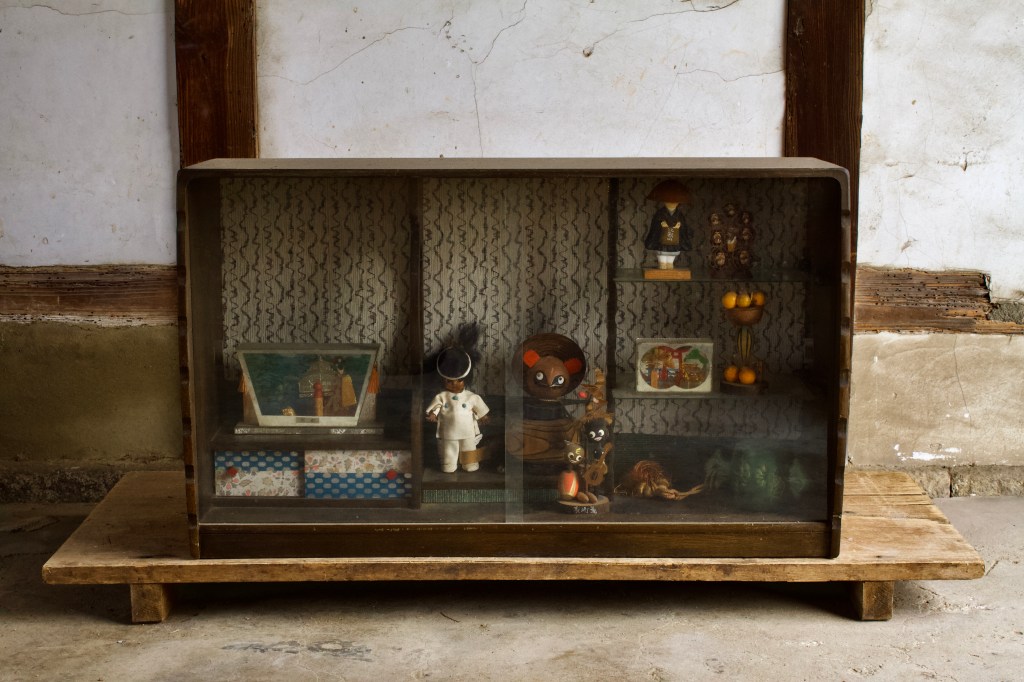
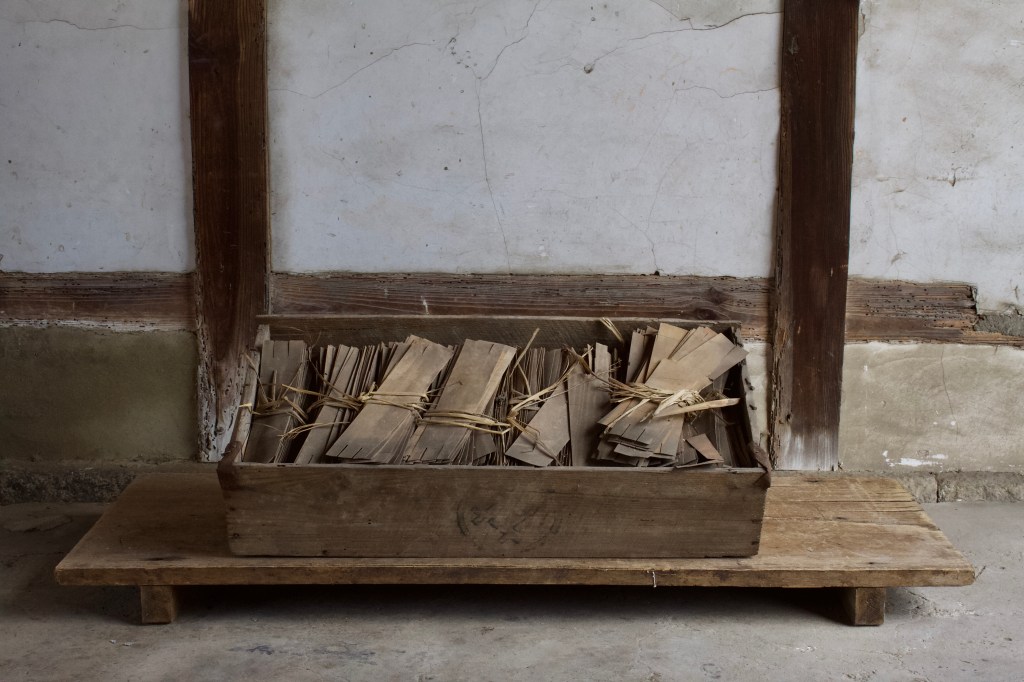
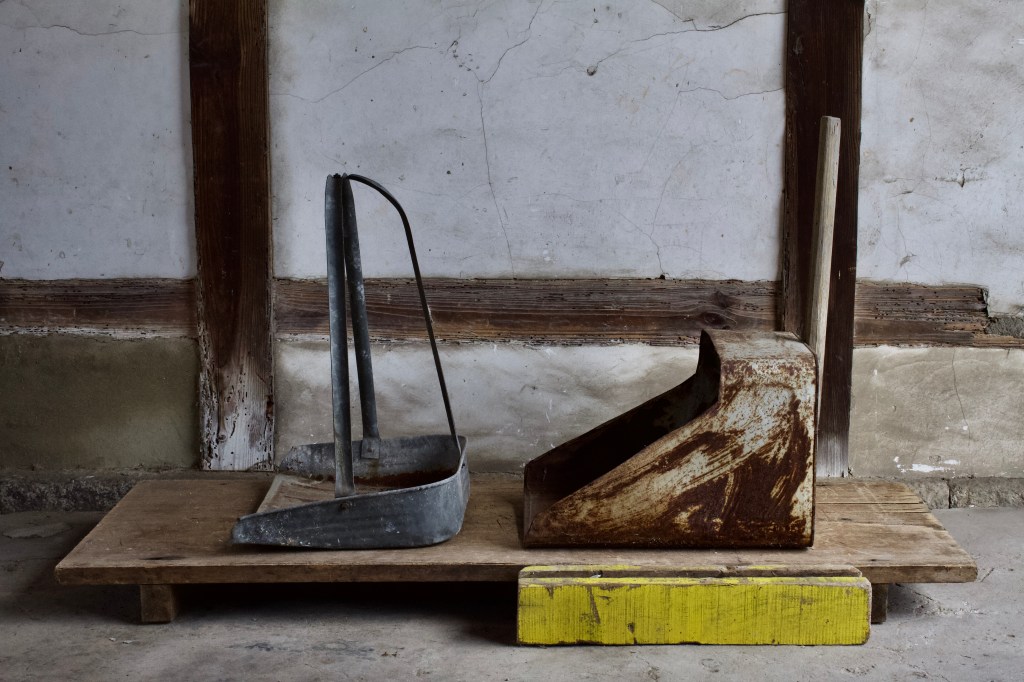
The installation is situated against the exterior wall of a Taishō-period (1912–1926) farm storage building in rural Japan. The architecture becomes an integral part of the work: its aged wooden beams frame and box the individual compositions, functioning both as structural boundary and historical context. Weathered and utilitarian, the building itself speaks of seasonal rhythms, rural labour, and the long continuum of use.
Each found object is displayed either in isolation or in thoughtful dialogue with similar items—arranged as if paused mid-gesture. They appear to float against the surface of a salvaged wooden plank, once used as a chopping board. This plank, scarred with the cuts and repetitions of past meals, becomes a quiet stage—connecting domestic action to sculptural presence.
Through this act of presentation, the mundane is gently elevated. What was once overlooked is now reconsidered. A rusty container, a broken chandelier, a splintered table top—each tells a story of work and wear, of human contact and eventual abandonment. Their quiet grouping invites reflection not just on form, but on time, erosion, and the fragile line between utility and obsolescence.
Inventory (1) is both record and offering. It proposes that memory might reside not only in grand monuments, but in the minor, overlooked tools of living—a material archive suspended between usefulness and disappearance.









 morgan veness