
Inventory (2), 2020
Inventory (2), 2020 is a curated assemblage of abandoned objects, discovered and documented within a rural Japanese country house. The collection is grounded in a dual impulse: to preserve each object’s physical presence and to reframe it through the lens of aesthetic inquiry. Each item is presented not merely as a remnant of utility, but as a vessel of latent potential—its material, shape, and wear revealing subtle narratives of use, obsolescence, and domestic life.
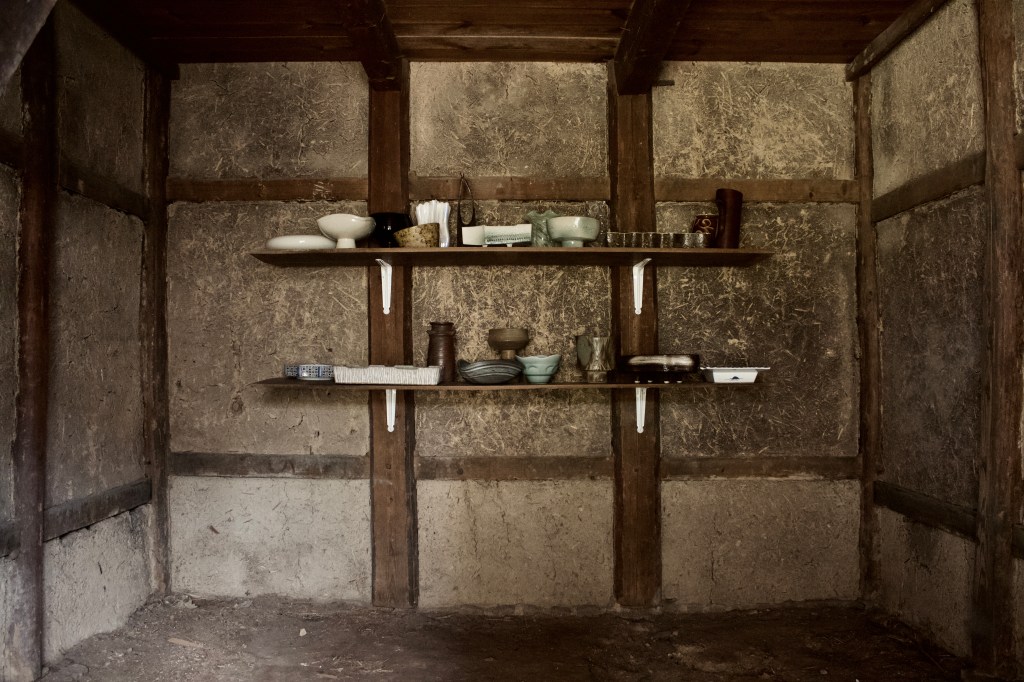
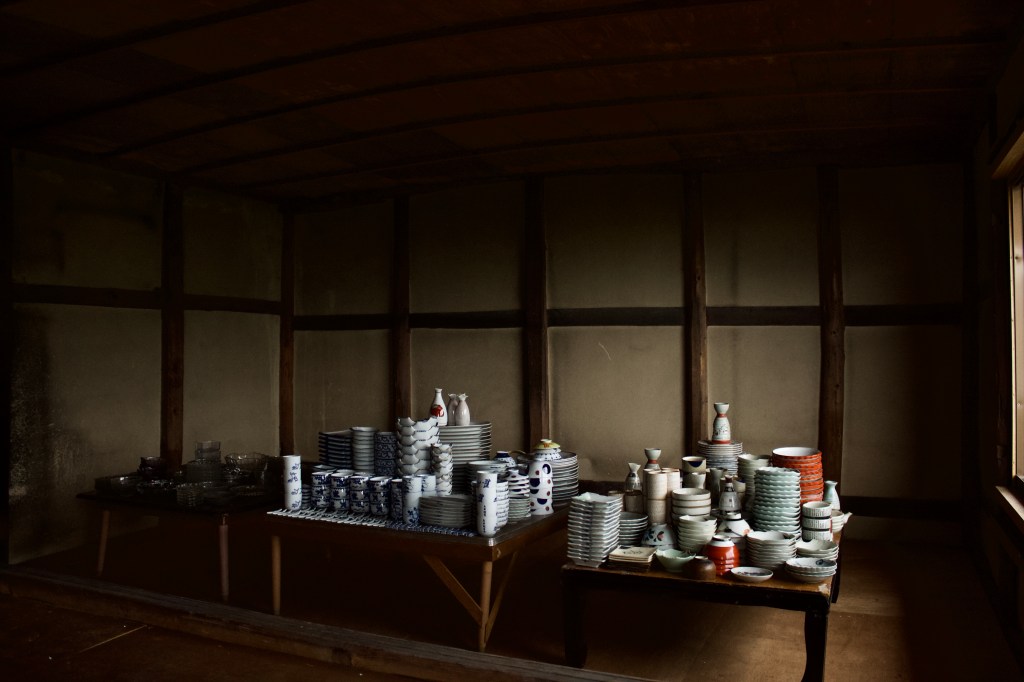
The installation unfolds within the interior of a Taishō-period (1912–1926) farm storage building. This space, with its timeworn beams and earthen tones, becomes both container and collaborator. Objects are carefully arranged—stacked in quiet towers, resting on wooden shelves, or laid out across tabletops—each in conversation with the others, guided by shared materials, forms, or implied function. The process of placement is intuitive yet deliberate, echoing museum taxonomies while resisting strict categorization.
These are not pristine artifacts but humble survivors of the everyday: rusted tins, worn tools, fragments of packaging, ceramic shards, bundles of twine, and other unremarkable cast-offs. Yet in their stillness, they suggest more than utility. The weight of use, the residue of touch, and the patina of age confer a quiet dignity—transforming the ordinary into something contemplative.
Light, space, and atmosphere play an essential role. Soft daylight filters in through small windows and open slats, casting shadows and highlighting surfaces. The interplay of illumination and emptiness generates a painterly quality, as if each arrangement were a still life waiting to be captured or remembered. This careful staging is not artificial but reverent—a way of holding time in suspension.
Inventory (2) invites a kind of slow looking. It resists spectacle and instead offers attention: to the unnoticed, the forgotten, the barely-there. The collection is not simply about preservation, but about recognition—an acknowledgment that meaning accumulates in quiet corners, and that memory resides as much in an aged wooden box or a dented tin as it does in more monumental forms.
In gathering these objects, arranging them, and letting them speak in silence, Inventory (2) becomes both a visual poem and a material archive. It offers not conclusions, but an invitation—to see, to remember, and to reconsider what we choose to keep, and why.



 morgan veness