
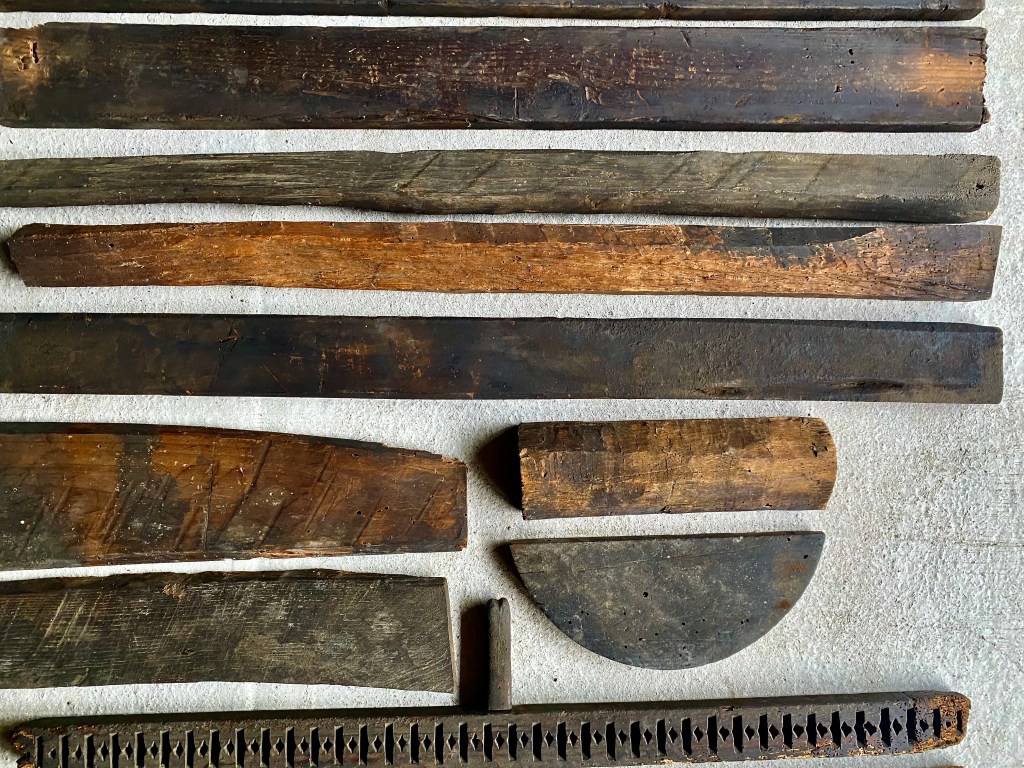
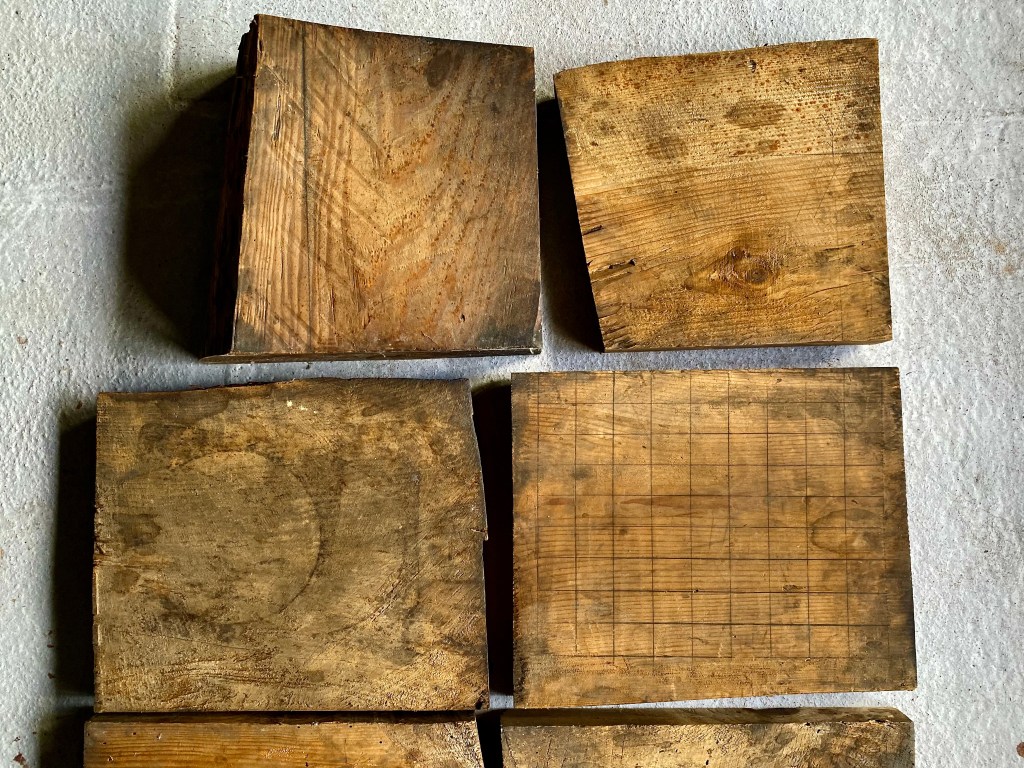
By assembling these wooden remnants, primarily chestnut, cedar, and pine I reflect on traditional Japanese woodworking practices of the Meiji era (1868–1912) to the Taisho era (1912–1926) in Japan.
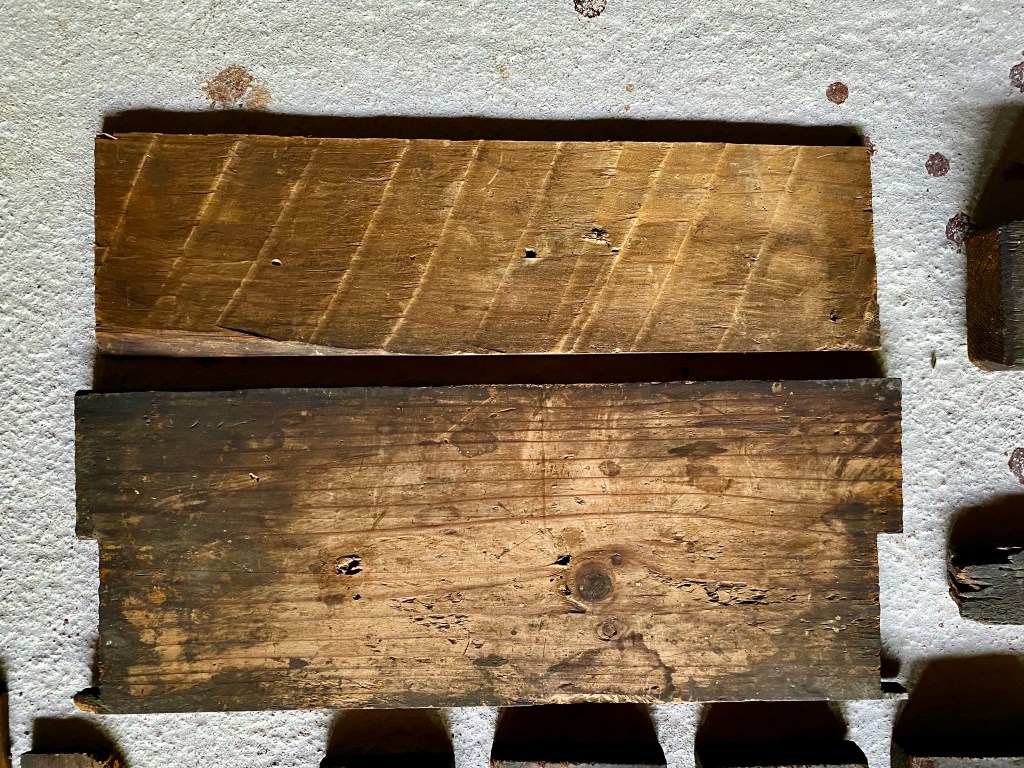
These wooden pieces, placed flat on the surface of the cement studio floor, become transformed from discarded utilitarian objects into artifacts of memory and impermanence. Collectively, they speak of rural labor, material culture, and the passage of time, while their collective arrangement invites viewers to consider themes of preservation, transience, and the beauty of natural aging.
Hand-sawn by local farmers they were most likely intended for practical use, like repairing the roofs of structures but were never used and instead were stored away in an attic for more than a century.
Visible marks like hand planing patterns combine with a rich patina developed over decades, the result of both smoke accumulation from hearth fires and applications of kakishibu, a natural tannin dye made from unripe persimmon fruits. Structural details, such as mortise holes, weathered edges, and burnished surfaces, suggest that some pieces once held functional roles.



 morgan veness